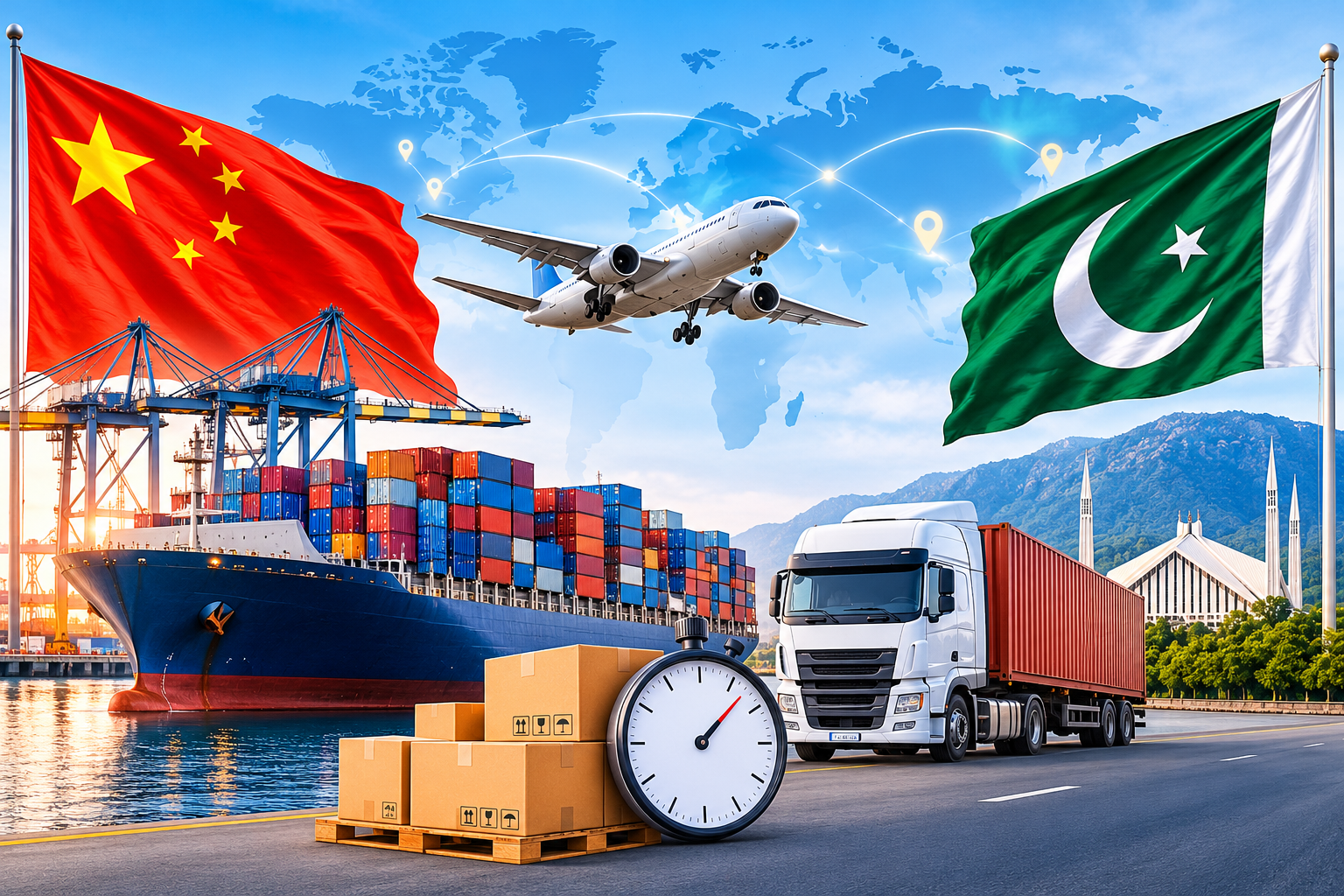
What Factors Affect Import from China to Pakistan Costs and Timing?
International trade between China and Pakistan involves several stages that affect what businesses pay and how long shipments take to arrive. Importers need to consider more than the freight rate when preparing an order. Supplier readiness, product specifications, transportation choices, customs requirements, and destination handling can all affect the outcome. Understanding these factors helps businesses prepare realistic budgets, select suitable shipping arrangements, and reduce avoidable delays.1. Product Type, Weight, and Dimensions
The characteristics of imported goods directly affect transportation arrangements. Cargo weight, package dimensions, quantity, and handling requirements help determine the space needed and the shipping method available. Heavy or oversized goods may require specialized handling, while fragile products often need additional protective packaging.
Product type also matters because certain items may be subject to import restrictions, safety standards, or special documentation requirements in Pakistan. Businesses should identify these conditions before confirming an order. Providing accurate product details allows shipping providers to assess the cargo properly and reduces the possibility of revised quotations or handling problems later.
2. Supplier Location and Cargo Readiness in China
The supplier's location and preparation schedule can influence both the cost and timing of an import. Factories located far from major ports, airports, or cargo collection points may require additional domestic transportation. The time needed to manufacture, inspect, package, and release the goods can also affect the planned departure date.
When businesses Import from China to Pakistan, they should confirm whether the supplier has completed production and prepared the shipment according to the agreed specifications. If goods are collected from multiple locations, additional coordination may be necessary. Early confirmation of cargo readiness helps importers plan transportation more accurately and avoid paying for unnecessary waiting or storage.
3. Choosing the Right Transportation Method
Air and sea freight are commonly considered for shipments between China and Pakistan. Each option has different cost and timing characteristics.
Air freight is generally suitable for urgent, lightweight, or high-value goods that need shorter transit times. Sea freight is often more economical for larger or heavier consignments when the buyer can accommodate a longer schedule. The best option depends on shipment dimensions, product requirements, delivery deadlines, and the total cost of each arrangement.
Importers should also distinguish between transit time and total delivery time. The complete process includes cargo preparation, origin handling, customs procedures, and transportation after arrival. A short international transit period does not necessarily mean the goods will reach the buyer within the same number of days.
4. Customs Duties, Taxes, and Product Classification
Customs requirements are an important part of the overall import process. The duties and taxes payable in Pakistan depend on factors such as the product's correct tariff classification, customs value, country of origin, and applicable regulations.
Incorrect product descriptions or inaccurate declared values can lead to additional checks and delays. Businesses should confirm the relevant classification and documentation requirements before dispatch. Commercial invoices, packing lists, and transport documents should contain consistent shipment information.
Importers should also avoid estimating customs expenses from freight charges alone. They should consult current Pakistani customs requirements or a qualified customs professional to understand the applicable duties, taxes, and regulatory conditions for their products.
5. Seasonal Demand and Shipping Capacity
Shipping costs and schedules can change during periods of high international cargo demand. Major shopping seasons, public holidays, factory shutdowns, and increased export activity may affect the availability of space on vessels and aircraft.
When cargo capacity is limited, businesses may face higher rates or need to wait for another departure. Suppliers may also experience production backlogs during busy periods, which can delay cargo collection.
Importers with fixed stock requirements should plan orders early and discuss possible scheduling changes with their shipping provider. Allowing a reasonable time margin can help businesses manage seasonal uncertainty without relying on last-minute arrangements.
6. Origin and Destination Handling Requirements
International transportation is only one part of the shipment process. Cargo may require collection from a factory, warehouse processing, packaging checks, loading, terminal handling, and documentation at the origin. After arrival in Pakistan, further handling may involve unloading, customs-related procedures, temporary storage, and local transportation.
Businesses should review which logistics services Pakistan providers include in their quotations and whether those services cover both ends of the journey. A quotation that lists only international freight may not include collection, destination handling, or delivery to the buyer's premises.
Understanding the full service scope helps importers compare prices fairly and identify possible additional charges before confirming a shipment.
7. Packaging Quality and Cargo Protection
Packaging affects how goods are handled, stored, and transported. Weak packaging can increase the risk of damage, particularly when cargo passes through several warehouses or handling facilities. Products that are fragile, sensitive to moisture, or easily affected by pressure may require suitable protective materials.
Packaging can also influence shipment dimensions and therefore the amount of cargo space required. Businesses should discuss packaging standards with suppliers before the goods are ready for collection. For certain products, suitable labelling and handling instructions may also be necessary.
Good packaging does not eliminate every transportation risk, but it can reduce avoidable damage and help ensure that goods arrive in a condition suitable for their intended use.
8. Route Selection and Final Delivery Location
The route selected for an international shipment can influence transportation expenses and arrival schedules. Cargo may travel through different ports, airports, or connecting points depending on the service arrangement and available capacity.
The final delivery location in Pakistan also matters. A shipment arriving in Karachi may require a different onward transport arrangement from cargo intended for Lahore, Islamabad, Faisalabad, or another city. Local distance, road conditions, delivery access, and cargo handling requirements can affect the final stage.
Before accepting a quotation, importers should confirm the exact delivery address and whether local transportation and unloading are included. This helps avoid confusion about where the provider's delivery responsibility ends.
9. Additional Charges and Quotation Conditions
The lowest initial freight quotation does not always represent the lowest total import cost. Depending on the service arrangement, additional expenses may include collection, documentation, terminal handling, customs-related services, storage, inspection, and local delivery.
Importers should request a written breakdown of the charges and ask which costs may change after the cargo is measured or inspected. They should also check whether the quotation is based on actual weight, volumetric weight, or another pricing method.
Cost factor What businesses should confirm
Cargo collection Whether pickup from the supplier is included
International freight Whether the rate covers air or sea transportation
Handling Whether origin and destination handling are included
Customs expenses Which duties, taxes, and clearance services are covered
Storage Whether additional storage charges may apply
Final delivery Whether transportation to the agreed address is included
A clear quotation helps businesses understand the financial commitment and compare different shipping arrangements on equal terms.
10. Planning Around Delays and Unexpected Changes
Even carefully arranged shipments can experience delays. Customs inspections, incomplete documentation, weather conditions, transport schedule changes, and port congestion may affect the expected delivery date.
Businesses should maintain communication with suppliers and shipping providers throughout the process. They should also keep copies of important documents, confirm shipment updates, and prepare alternative inventory plans when goods are needed for ongoing operations.
A realistic schedule should include time for cargo preparation, transportation, customs processing, and final delivery. Planning with reasonable flexibility is more dependable than relying entirely on the fastest estimated transit time.
Conclusion
The cost and timing of imports from China to Pakistan depend on several connected factors, including product specifications, supplier readiness, transportation methods, customs requirements, seasonal demand, and destination handling. Businesses that review these details before dispatch can make better shipping decisions and prepare more accurate budgets. Clear documentation, transparent quotations, and realistic delivery estimates are essential for managing international imports effectively.
Frequently Asked Questions
1. What is the biggest factor affecting import costs from China to Pakistan?
There is no single factor that determines the total cost. Cargo weight, dimensions, product type, shipping method, customs duties, handling charges, and final delivery requirements all contribute to the overall expense.
2. Is air freight faster than sea freight from China to Pakistan?
Air freight generally has a shorter transportation time than sea freight. However, the complete delivery period also depends on cargo readiness, departure schedules, customs processing, and local transportation.
3. Why do import shipments from China sometimes arrive late?
Delays may occur because of supplier production issues, incomplete documents, limited cargo capacity, customs inspections, weather conditions, or transportation disruptions.
4. Are customs duties included in international shipping charges?
Not necessarily. Freight charges and customs duties are separate cost components unless a specific agreement includes both. Importers should check the quotation and confirm the applicable Pakistani duties and taxes.
5. How can businesses control their import expenses?
Businesses can improve cost planning by providing accurate cargo details, comparing air and sea freight, checking customs requirements, confirming supplier readiness, and requesting a complete written quotation before dispatch. 2026-11-4 21:14 TYPHU188 TODAY give me oxycodoine give me oxycodoine give me oxycodoine How to Choose the Right Rollator Walker for Better Mobility Resit Dissertation Help UK for Expert Academic Guidance What Factors Affect Gum Shoes Price in Pakistan for Buyers Today? Experience Traditional Dining at Ethiopian Restaurant LA Re:ttokviewer BitStarz Casino Guide to Slots, Bonuses and Crypto Payments Escort Service Udaipur: Honest Experiences from the Lake City Fullstack classes in Pune Heavy Duty Hose Clamp in Delhi