Why Real World Asset Tokenization Matters in the Digital Economy
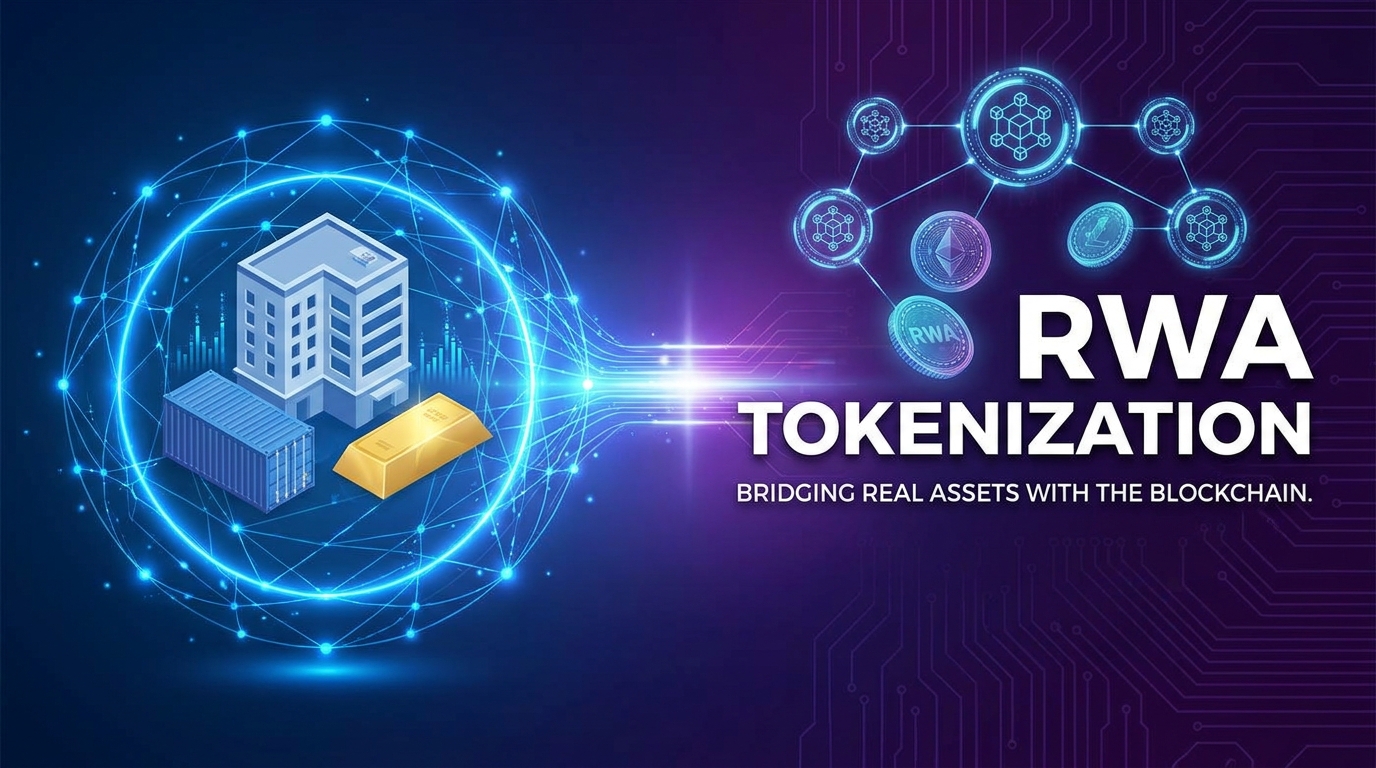
The digital economy is no longer limited to online payments, e-commerce platforms, cloud software, and mobile applications. It is increasingly becoming an economy of programmable ownership, where assets can be issued, transferred, financed, and settled through digital infrastructure. At the center of this shift is real world asset tokenization, commonly known as RWA tokenization. It refers to the process of representing ownership rights, cash-flow claims, or economic interests in physical or traditional financial assets as blockchain-based digital tokens. These assets may include real estate, government bonds, private credit, commodities, invoices, carbon credits, intellectual property, funds, and even fine art.The importance of RWA tokenization lies in its ability to connect two worlds that have historically operated separately: traditional finance and blockchain-based digital markets. Traditional assets often suffer from high entry barriers, slow settlement cycles, fragmented recordkeeping, limited transparency, and restricted liquidity. Blockchain networks, on the other hand, offer programmability, near-instant transfer, automated compliance logic, and global digital accessibility. When these strengths are applied to real-world assets, the result is not merely a new investment product; it is a potential redesign of how value moves across the economy.
Market interest reflects this momentum. McKinsey estimates that tokenized market capitalization across major asset classes could reach about $2 trillion by 2030, with a bullish scenario of around $4 trillion, excluding cryptocurrencies and stablecoins. Citi’s 2026 outlook is even more ambitious, forecasting a $5.5 trillion base case and an $8 trillion bull case for tokenized assets by 2030. These projections vary, but they point in the same direction: tokenization is moving from experimentation toward institutional adoption.
The Infrastructure Layer: Why Businesses Need the Right RWA Tokenization Partner
For enterprises, asset managers, fintech startups, and real estate firms, the biggest challenge is not understanding the promise of tokenization; it is building a secure, compliant, scalable system that can actually support real assets. This is where a trusted RWA tokenization development company becomes essential. Tokenization is not simply about creating a token on a blockchain. It requires legal structuring, asset verification, smart contract development, investor onboarding, custody integration, compliance checks, secondary transfer controls, reporting tools, and redemption mechanisms.
Professional RWA tokenization development services help businesses convert an idea into a working asset-tokenization ecosystem. A strong development approach includes choosing the right blockchain network, designing token standards, embedding KYC/AML controls, integrating wallets and custodians, building investor dashboards, automating dividend or yield distribution, and ensuring that off-chain asset records remain synchronized with on-chain token activity. Businesses planning to launch a project can explore the solution to understand how a full-stack tokenization model can be structured.
The demand for rwa tokenization platform development is growing because institutions need more than isolated token issuance. They need platforms that can manage the complete asset lifecycle: issuance, subscription, transfer restrictions, compliance updates, asset performance tracking, settlement, redemption, and audit trails. Without this infrastructure, tokenization risks becoming a superficial digital wrapper rather than a meaningful improvement over traditional finance.
Why RWA Tokenization Matters for Liquidity and Market Access
One of the strongest arguments for RWA tokenization is liquidity. Many valuable assets are illiquid not because investors do not want them, but because the systems around them are slow, expensive, and restrictive. Real estate, private equity, infrastructure funds, private credit, and collectible assets often require large ticket sizes, manual paperwork, long lock-in periods, and limited secondary markets. Tokenization can lower these barriers by enabling fractional ownership and digital transferability.
For example, a commercial property worth $20 million can be divided into digital tokens representing economic rights in the asset. Instead of needing millions of dollars to participate, qualified investors may access smaller fractions, depending on regulatory rules. This does not magically make every asset liquid, but it can create more flexible ownership structures and broader investor participation. The distinction is important: tokenization enables the conditions for liquidity, but liquidity still depends on market demand, regulatory permissions, credible valuation, and reliable trading venues.
This is why tokenized U.S. Treasuries have become one of the earliest successful RWA categories. Treasury-backed tokens are relatively easier to value, backed by highly liquid government debt, and attractive to digital-asset investors seeking yield-bearing instruments. Reuters reported that tokenized Treasuries had reached a public-blockchain market capitalization of about $2.4 billion in late 2024, with products issued by both blockchain-native firms and traditional institutions such as BlackRock and Franklin Templeton.
By 2026, RWA.xyz market data showed a broader tokenized real-world asset market with more than $27 billion in distributed asset value and over 700,000 asset holders, indicating that adoption has moved beyond small pilot projects.
Settlement Efficiency and the End of Fragmented Back Offices
Traditional asset markets are built on layers of intermediaries: brokers, custodians, transfer agents, clearing houses, fund administrators, settlement banks, registrars, and compliance teams. These entities play important roles, but the result is often operational duplication. Each participant maintains its own records, reconciles them with others, and waits for settlement windows to close. This creates delays, costs, and counterparty risk.
Tokenization can improve this architecture by allowing asset ownership, transfer instructions, compliance rules, and settlement logic to exist within a shared programmable environment. The Bank for International Settlements describes tokenization as a way to integrate messaging, reconciliation, and asset transfer into a single operation. It also notes that tokenized systems could improve cross-border payments, securities markets, collateral management, margining, and delivery-versus-payment arrangements.
This matters deeply for the digital economy because businesses increasingly expect financial infrastructure to operate with the speed and transparency of software. In a tokenized environment, settlement can move closer to real time. Smart contracts can automate interest payments, dividend distribution, collateral movements, transfer restrictions, and redemption workflows. Investors can see transaction histories on-chain, while issuers can maintain cleaner ownership records.
BlackRock’s BUIDL fund is a useful case study. Launched in 2024 on Ethereum, the fund seeks to maintain a stable $1 token value, invests in cash, U.S. Treasury bills, and repurchase agreements, and allows tokens to be transferred 24/7/365 among pre-approved investors. This design shows how traditional fund structures can be adapted to blockchain rails without abandoning compliance requirements.
Financial Inclusion Without Ignoring Regulation
RWA tokenization is often described as democratizing finance, but that phrase must be used carefully. Many tokenized products remain available only to institutions or accredited investors because securities laws still apply. A token does not remove the need for investor protection, disclosure, custody, tax compliance, and regulatory oversight. However, tokenization can gradually expand access by reducing operational costs and enabling smaller, more flexible units of participation.
In traditional markets, high minimum investments are partly caused by administration costs. If onboarding, compliance verification, cap-table management, transfer restrictions, and distribution payments can be automated, issuers may be able to serve more investors at lower cost. Over time, this could help broaden access to assets that were historically reserved for large institutions, such as private credit funds, commercial real estate, infrastructure projects, and money market products.
The digital economy thrives when access expands without sacrificing trust. For RWA tokenization, that means platforms must integrate identity verification, jurisdictional controls, investor eligibility checks, data privacy, and transparent reporting. The most successful models will not be unregulated free-for-alls; they will be compliant digital markets that combine blockchain efficiency with legal enforceability.
Programmability: The Feature That Makes Tokenization More Than Digitization
A common misunderstanding is that tokenization is merely the digital representation of an asset. In reality, the more powerful feature is programmability. A tokenized asset can include rules that govern who can hold it, where it can be transferred, when distributions are paid, how collateral is managed, and what happens during redemption.
For example, a tokenized private credit product could automatically distribute interest to eligible holders based on payment schedules. A tokenized real estate asset could route rental income to investors after expenses are recorded. A tokenized carbon credit could include retirement logic to prevent double counting. A tokenized invoice could be financed, transferred, and settled with automated status updates.
This programmability is especially important for composability, where tokenized assets can interact with other digital financial applications. Tokenized Treasuries, for instance, may serve as collateral in lending markets, liquidity management tools, or settlement instruments. Citi identifies digital money, including regulated stablecoins and tokenized deposits, as a foundational enabler because tokenized assets need trusted on-chain cash for delivery-versus-payment settlement.
Real-World Use Cases Across Industries
The most mature RWA use cases are currently in financial assets. Tokenized money market funds, Treasuries, bonds, and private credit have gained traction because they have clearer valuation models and existing investor demand. BlackRock, Franklin Templeton, Ondo Finance, WisdomTree, and other players have shown that tokenization can support yield-bearing products and institutional-grade digital settlement. McKinsey notes that tokenized money market funds had already attracted more than $1 billion in assets under management by 2024, signaling demand from investors with on-chain capital.
Real estate is another high-potential category. Property ownership is traditionally paperwork-heavy, geographically constrained, and illiquid. Tokenization can simplify fractional participation, automate distributions, and make ownership records more transparent. However, real estate tokenization is also complex because property management, title verification, legal claims, taxation, and local regulations remain off-chain realities.
Commodities such as gold also fit naturally into tokenization models because they can be stored by custodians and represented digitally. Tokenized gold products allow investors to hold blockchain-based claims linked to physical reserves. Similarly, supply-chain finance and invoice tokenization can help businesses unlock working capital by turning receivables into transferable digital assets.
The Challenges That Must Be Solved
Despite its promise, RWA tokenization faces major challenges. The first is legal enforceability. A token must correspond to a real claim that courts, custodians, issuers, and investors recognize. If the legal wrapper is weak, the token may be technologically impressive but economically unreliable.
The second challenge is custody and asset verification. For physical assets, investors need confidence that the underlying asset exists, is properly valued, and is not double-pledged. For financial assets, they need clarity on who holds the securities, how redemption works, and what happens in insolvency.
The third challenge is liquidity. Tokenization can make transfer easier, but it cannot guarantee active buyers and sellers. Secondary markets require regulatory approval, market makers, transparent pricing, and investor confidence. Without these, tokenized assets may remain technically transferable but practically illiquid.
The fourth challenge is interoperability. The future will likely include public blockchains, permissioned networks, bank-led ledgers, tokenized deposits, stablecoins, and traditional market infrastructure operating side by side. Citi expects hybrid models to dominate for some time, with tokenized and legacy systems coexisting during the transition.
Why It Matters to the Broader Digital Economy
RWA tokenization matters because it turns assets into programmable building blocks for digital commerce. In the same way APIs allowed software systems to connect, tokenized assets can allow financial value to move across platforms more efficiently. Businesses could raise capital from a wider investor base. Investors could access diversified assets with improved transparency. Financial institutions could reduce settlement risk. Markets could operate with fewer manual reconciliations and more automated compliance.
The broader digital economy depends on trusted ownership, efficient payments, transparent records, and rapid settlement. Tokenization addresses all four. It does not eliminate the need for institutions, regulation, or legal contracts. Instead, it gives them better infrastructure. The future is not likely to be a complete replacement of traditional finance, but a gradual integration of blockchain rails into mainstream financial systems.
Conclusion
Real world asset tokenization is important because it brings liquidity, transparency, programmability, and operational efficiency to assets that have long been constrained by legacy systems. As institutional adoption grows and tokenized finance becomes a practical part of capital markets, businesses need reliable technology partners that understand both blockchain architecture and real-world compliance. Blockchain App Factory provides the best services for businesses looking to build secure, scalable, and market-ready RWA tokenization solutions that can support the next phase of the digital economy.
FAQs
1. What is real world asset tokenization?
Real world asset tokenization is the process of representing ownership rights or economic claims in physical or traditional financial assets as digital tokens on a blockchain. These assets may include real estate, bonds, commodities, private credit, invoices, funds, or other tangible and intangible assets.
2. Why is RWA tokenization important in the digital economy?
It matters because it can make asset ownership more transparent, transferable, programmable, and efficient. It helps reduce settlement delays, lower administrative friction, improve investor access, and connect traditional assets with digital financial infrastructure.
3. Does tokenization automatically make an asset liquid?
No. Tokenization improves transferability and can support liquidity, but real liquidity depends on buyer demand, regulatory approval, credible valuation, compliant marketplaces, and investor trust.
4. Which assets are best suited for tokenization?
Assets with clear ownership rights, reliable valuation, strong demand, and manageable compliance requirements are best suited. U.S. Treasuries, money market funds, bonds, real estate, private credit, commodities, and invoices are among the most common examples.
5. What should businesses look for in an RWA tokenization platform?
Businesses should look for secure smart contracts, compliance automation, investor onboarding, KYC/AML integration, asset verification, custody support, reporting dashboards, transfer controls, redemption workflows, and scalability across multiple asset classes. 2026-7-9 17:46 Long-Term Benefits of Choosing Dreamexch in 2026 Undead Corridor Restaurant Chairs https://www.facebook.com/BioReliefCBDGummies/ iso 27001 zertifizierung kosten Aer Lingus Head Office +1-844-584-7422 https://www.facebook.com/DustaProRobotVacuumCleanerAU/ Lufthansa Airlines Dallas Office +1-844-584-7422 +1-844-962-3246 Air France Geneva Office QLD Fast Car Removal Services – Quick, Reliable & Hassle-Free East Shore Lake Tahoe Boating Flair Airlines Toronto Pearson Airport Terminal https://www.facebook.com/TryMedibloomCBDGummies/