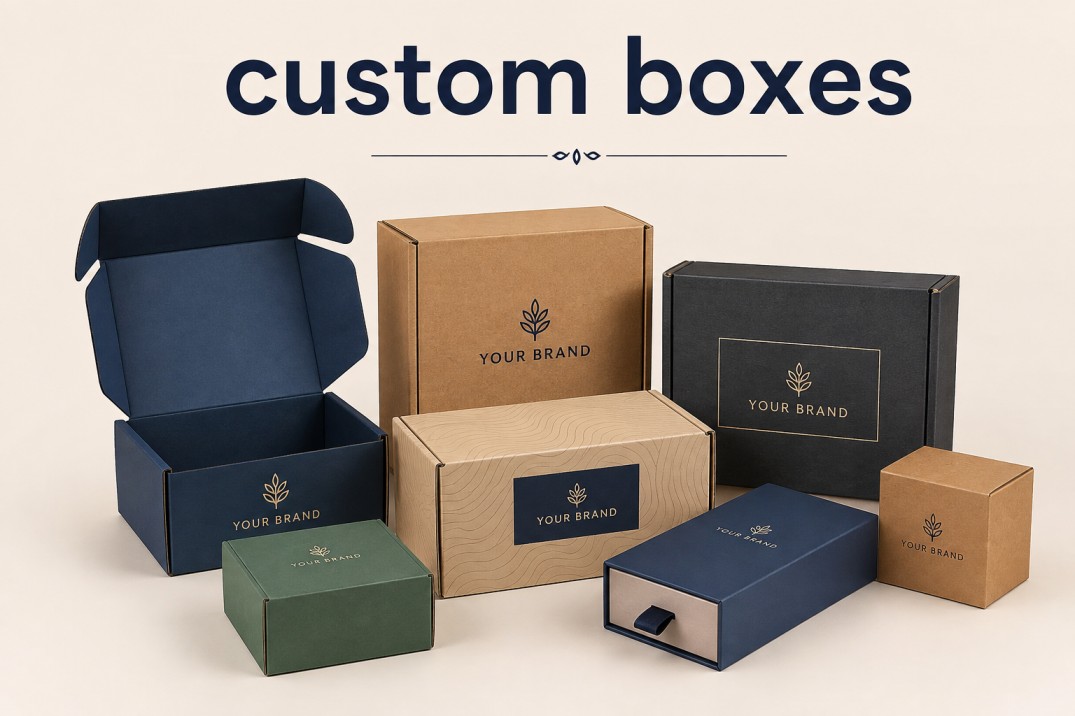
How Custom Packaging Boxes Protect Products and Reduce Business Risks
## How Custom Packaging Boxes Can Help Businesses Manage Product and Shipping RisksBusinesses spend considerable time protecting their finances, assets, employees, and operations from unexpected risks. Insurance is an important part of that strategy, but risk management does not begin with an insurance policy. It also starts with practical steps that can prevent avoidable losses.
For product-based businesses, packaging is one of those steps.
Custom packaging boxes are designed around the size, weight, shape, and requirements of a particular product. Beyond branding and presentation, well-designed packaging can help reduce damage during storage, handling, and transportation. This can potentially lower product losses, customer complaints, returns, and other costs associated with poorly protected goods.
## Why Product Protection Matters for Businesses
Every product that leaves a warehouse faces several potential risks. Packages may be stacked, dropped, exposed to moisture, compressed during transportation, or handled multiple times before reaching the customer.
When packaging is too large, too weak, or poorly designed, the product inside may be more vulnerable to damage. A damaged shipment can create additional expenses for a business, including replacement products, return shipping, customer service costs, and lost sales opportunities.
This is why businesses increasingly consider packaging part of their broader operational risk-management strategy.
Strong and appropriately sized packaging cannot eliminate every shipping risk, but it can provide an additional layer of protection between the product and the outside environment.
## How Custom Packaging Boxes Support Risk Management
### 1. Better Product Fit
Generic boxes often leave excess space around the product. That extra space can allow items to move inside the package during transportation.
Custom-sized boxes are manufactured according to product dimensions. A closer fit can help reduce unnecessary movement and may make it easier to use protective inserts, dividers, or cushioning materials.
For fragile products such as glass containers, cosmetics, electronics, candles, and specialty foods, proper internal protection can be especially important.
### 2. Protection During Handling and Transportation
Products can pass through several hands before reaching their final destination. They may be loaded onto trucks, moved through warehouses, placed on shelves, or delivered by couriers.
Packaging materials and structural designs should therefore be selected according to the product's needs.
For example, businesses shipping heavier products may require stronger cardboard or corrugated materials, while lightweight retail products may benefit from folding cartons or other compact packaging formats.
The objective is simple: create packaging that is appropriate for the product and its distribution environment.
### 3. Reduced Exposure to Environmental Conditions
Moisture, dust, sunlight, and temperature changes can affect certain products during storage and transportation.
Packaging can provide a physical barrier against some external conditions. Depending on the product, businesses can also consider coatings, liners, inserts, or other packaging features designed for specific handling requirements.
Choosing the right packaging structure can therefore become an important part of protecting inventory before it reaches the customer.
## Custom Packaging and Business Costs
Product damage does not only affect inventory. It can influence several areas of a company's operating costs.
Consider an online retailer that ships hundreds of products every week. If a small percentage of shipments arrive damaged, the business may have to handle replacement orders, refunds, return transportation, customer support, and additional fulfillment work.
Over time, these expenses can become significant.
Custom packaging boxes can help businesses take a more controlled approach to packaging. Instead of relying on one generic box for multiple products, companies can select packaging based on product dimensions, weight, fragility, and shipping requirements.
This does not guarantee that products will never be damaged, but it can help businesses address preventable packaging-related problems.
## Packaging Is Not a Replacement for Insurance
It is important to distinguish between **preventive risk management** and insurance coverage.
Insurance is designed to provide financial protection against covered risks according to the terms and limits of a policy. Packaging, on the other hand, is a physical risk-reduction measure.
A business may use commercial property, liability, cargo, or other appropriate insurance policies while also taking practical steps to reduce the possibility of losses.
In other words, insurance and protective packaging can serve different purposes.
Good packaging may help prevent certain problems from happening in the first place, while appropriate insurance can provide financial protection when covered losses occur.
Businesses should review their individual insurance requirements with a qualified insurance professional rather than assuming that packaging or any other preventive measure replaces insurance coverage.
## The Role of Packaging in E-Commerce
E-commerce businesses face particular packaging challenges because products are shipped directly to consumers rather than being transferred in bulk between established retail locations.
Customers also have high expectations regarding the condition of their deliveries.
A package that arrives crushed, torn, or poorly sealed can negatively affect the customer's perception of a business even when the product itself is undamaged.
Custom packaging can address both functional and presentation requirements. Businesses can incorporate suitable structural designs, protective inserts, secure closures, and branded printing into their packaging.
For companies building an online brand, this creates an opportunity to combine product protection with a professional unboxing experience.
## Choosing the Right Packaging for Your Products
Before ordering packaging, businesses should evaluate several factors:
* Product dimensions and weight
* Product fragility
* Shipping distance and delivery method
* Storage conditions
* Expected handling during transportation
* Required internal protection
* Branding requirements
* Packaging material and sustainability goals
* Production volume and budget
For businesses comparing different options, working with a packaging manufacturer can make it easier to determine which box style and material are appropriate for their products.
Companies interested in exploring different packaging formats can also review options such as [custom packaging boxes](https://www.packagingeagle.com/) for product-specific packaging solutions.
## Sustainable Packaging and Risk Reduction
Sustainability has also become an important consideration for many businesses. Using appropriately sized packaging can help avoid unnecessary material and excessive empty space.
Businesses may consider recyclable cardboard, kraft paper, corrugated materials, and other packaging solutions depending on their product requirements.
Sustainable packaging should still provide adequate protection. The most environmentally responsible option is not necessarily the one that uses the least material; it should also be suitable for protecting the product throughout its expected journey.
If inadequate packaging results in damaged merchandise and replacement shipments, the overall environmental and financial impact may increase.
## A Practical Approach to Business Protection
Businesses cannot predict every risk that may occur during operations, but they can take reasonable steps to reduce preventable problems.
Insurance remains an important component of financial risk management, particularly for businesses exposed to property damage, liability, transportation risks, and other covered losses. At the same time, operational decisions such as selecting appropriate packaging can help protect inventory before a claim ever becomes necessary.
Custom packaging boxes offer businesses a practical way to combine product protection, efficient shipping, branding, and presentation. When packaging is designed around the actual requirements of a product, it can become more than a container—it can become part of a company's broader approach to managing operational risk.
For product-based businesses, protecting what they sell begins long before the customer opens the package. It starts with choosing the right packaging for the journey ahead. 2026-9-7 22:13 JetBlue Airways Oakland Office in USA +1-855-738-4194 Brussels Airlines Accra Office +1-855-738-4194 go88gocom1 JetBlue Airways Vancouver Office +1-855-738-4194 hitclub99net Concrete Walkways San Jose Protecting Your Canopy from Wood-Boring Insects Through Calculated Cuts Is your car likely to pass the MOT test on the first attempt? Discover Adult Couple Videos With Fantasy Akemi Coffee Boost Canada Bulk Email Verifier Helps Maintain a Cleaner and More Accurate Contact Database Generative AI Consulting Services: A Complete Guide for Businesses https://www.facebook.com/VapoCept.Get/