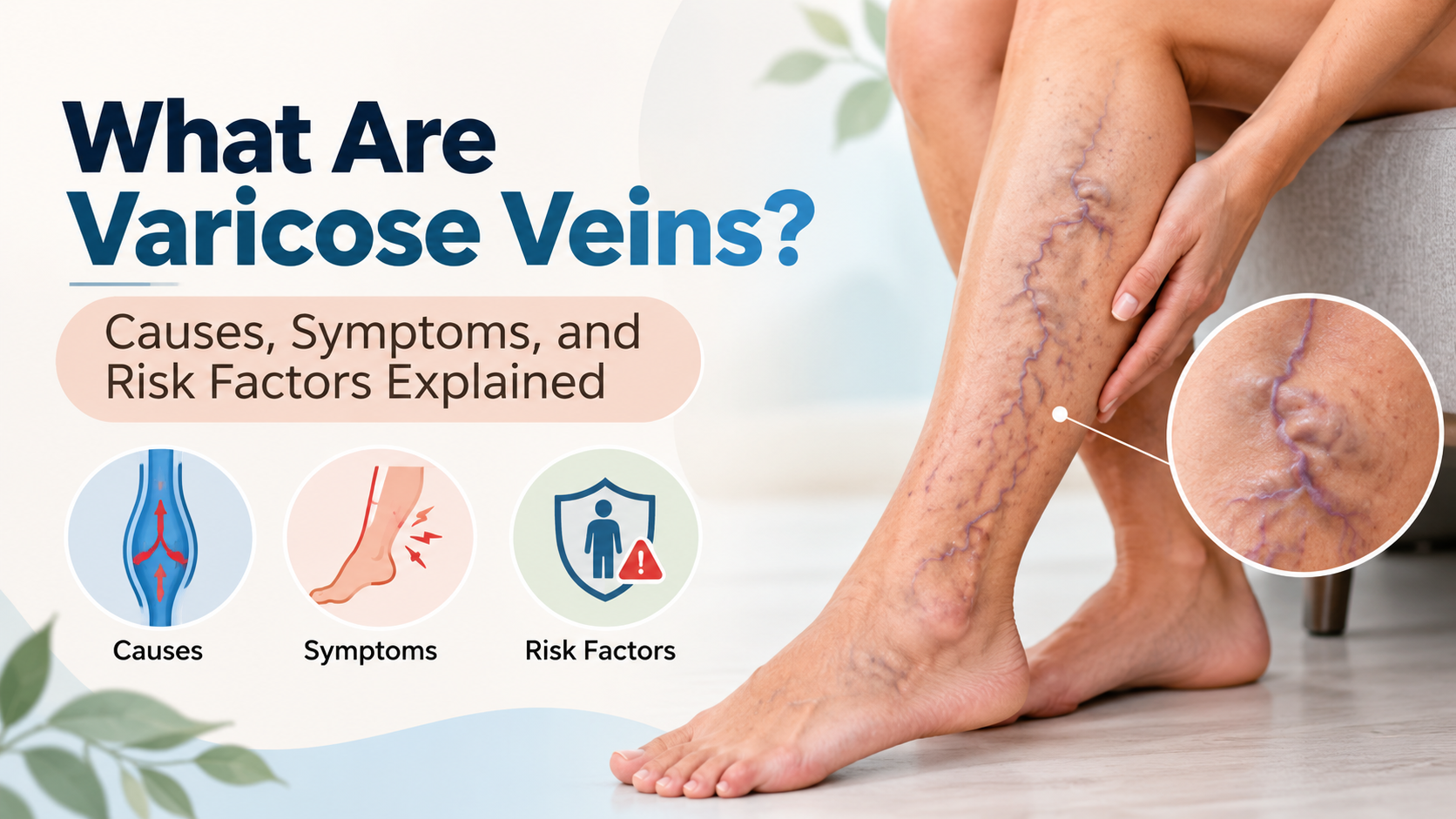
What Are Varicose Veins? Causes, Symptoms, and Risk Factors Explained
Have you ever noticed blue or purple veins appearing on your legs that look swollen or twisted? These veins are often called varicose veins. While some people consider them only a cosmetic concern, they can sometimes cause discomfort, heaviness, and other symptoms that affect everyday activities.Varicose veins are a common condition, particularly among adults who spend long hours standing or sitting. Understanding why they develop, how to recognize the early signs, and which factors increase the risk can help people make informed decisions about their health and improve their understanding of vein health.
What Are Varicose Veins?
Varicose veins are enlarged, swollen veins that usually appear close to the surface of the skin, most commonly on the legs and feet. They may look blue, dark purple, or reddish and often have a twisted or bulging appearance.
To understand why this happens, it helps to know how veins work. Veins carry blood back toward the heart. In the legs, this process requires blood to travel upward against gravity. Small valves inside the veins help prevent blood from flowing backward.
When these valves become weak or stop working properly, blood can collect inside the veins instead of moving efficiently toward the heart. The resulting increase in pressure can cause the veins to stretch, enlarge, and become visible beneath the skin.
Not everyone with varicose veins experiences pain or other symptoms. Some people notice only visible changes, while others develop aching, swelling, itching, or a feeling of heaviness in their legs.
What Causes Varicose Veins to Develop?
There is rarely just one reason behind varicose veins. In many cases, they develop because the vein walls lose some of their elasticity or the valves become less effective over time.
Several factors can contribute to this process.
1. Weak or Damaged Vein Valves
Healthy vein valves open to let blood move toward the heart and close to prevent it from flowing backward. If these valves become weak or damaged, blood may flow in the wrong direction and accumulate in the veins.
This condition, known as venous insufficiency, can gradually increase pressure inside the affected veins.
2. Prolonged Standing or Sitting
Spending long periods in one position can make it harder for blood to return efficiently from the legs. This is particularly relevant for people whose jobs involve standing for several hours, such as teachers, healthcare workers, retail employees, and factory workers.
Sitting for extended periods can also reduce the activity of the calf muscles, which help push blood upward through the veins.
Although standing or sitting for long periods does not automatically cause varicose veins, it may contribute to symptoms and increase the strain on the leg veins.
3. Age-Related Changes
As people get older, the tissues that support their veins may gradually lose strength and elasticity. The valves inside the veins can also become less effective.
This explains why varicose veins become more common with age, although they can also develop in younger adults.
4. Hormonal Changes
Hormonal changes may influence the strength and flexibility of vein walls. Pregnancy, menstruation, and menopause can be associated with changes that affect vein health.
Hormonal factors may help explain why varicose veins are more frequently reported among women, although men can develop them as well.
5. Increased Pressure on the Veins
Anything that increases pressure within the veins of the lower body may contribute to the development or worsening of varicose veins. Pregnancy and excess body weight are two examples.
As the pressure increases, the veins may have to work harder to move blood back toward the heart.
What Are the Common Symptoms of Varicose Veins?
The appearance of enlarged veins is often the first noticeable sign. However, symptoms can vary considerably from one person to another.
Common symptoms include:
Visible, bulging veins: Veins may appear twisted, raised, or enlarged beneath the skin.
Aching or throbbing: Some people experience a dull ache in their legs, particularly after standing for a long time.
Heaviness or tiredness: The legs may feel unusually heavy, especially toward the end of the day.
Swelling around the ankles: Fluid may accumulate around the lower legs and ankles.
Itching near the affected veins: The skin around a varicose vein may feel irritated or itchy.
Muscle cramps: Some people experience cramping, particularly at night.
Skin discoloration: Long-standing vein problems can cause the skin near the ankles to become darker or develop other changes.
These symptoms may become more noticeable after prolonged standing and may improve when the legs are elevated or after walking.
It is also important to remember that similar symptoms can occur with other medical conditions. Visible veins alone do not establish how severe an underlying vein problem may be.
Who Is More Likely to Develop Varicose Veins?
Certain factors can increase the likelihood of developing varicose veins. Some cannot be changed, while others relate to daily habits and physical health.
Family History
Genetics can play an important role in vein health. People with close relatives who have varicose veins may be more likely to develop the condition themselves.
A family history does not mean varicose veins are inevitable, but it can indicate a greater predisposition.
Pregnancy
During pregnancy, the body produces more blood to support the developing baby. Hormonal changes can also relax vein walls, while the growing uterus places additional pressure on pelvic veins.
These changes can contribute to varicose veins, particularly in the legs. In some cases, the veins become less prominent after delivery, although they may not disappear completely.
Excess Body Weight
Carrying excess weight can increase pressure on the veins in the lower body. This may contribute to the development of varicose veins or make existing symptoms more noticeable.
Maintaining a healthy weight can support overall circulation and general health.
Lack of Physical Activity
The calf muscles act as a natural pump, helping blood travel from the legs back toward the heart. When these muscles remain inactive for long periods, this pumping action becomes less effective.
Regular movement, including walking and gentle ankle exercises, can help support healthy circulation.
Occupation and Daily Routine
People who spend much of the working day standing or sitting may experience more pressure on their leg veins. This does not mean they will necessarily develop varicose veins, but their daily routine can influence symptoms and circulation.
Taking movement breaks, changing positions, and avoiding prolonged inactivity may help reduce discomfort.
Can Varicose Veins Lead to Other Health Problems?
Many people with varicose veins do not develop serious complications. However, long-standing or more advanced vein disease can sometimes cause additional problems.
Skin changes: Persistent pressure in the veins can lead to dry, irritated, or discolored skin, particularly around the ankles.
Venous leg ulcers: In more advanced cases, poor venous circulation can contribute to wounds that heal slowly, often near the ankle.
Bleeding: A vein close to the surface of the skin may bleed if it is injured. Because these veins can bleed significantly, persistent bleeding requires prompt medical attention.
Superficial vein inflammation or clotting: A painful, red, warm, or firm area along a superficial vein may indicate inflammation or a blood clot in that vein.
It is important not to assume that all leg swelling or pain is caused by varicose veins. Sudden swelling in one leg, particularly when accompanied by pain, warmth, or redness, may indicate deep vein thrombosis (DVT), a potentially serious condition that needs urgent medical assessment. Sudden breathlessness, chest pain, or coughing up blood requires emergency medical care.
How Are Varicose Veins Diagnosed?
A healthcare professional will usually begin by asking about symptoms, medical history, family history, and daily activities. They may examine the legs while the person is standing or sitting to assess visible veins and any swelling or skin changes.
A duplex ultrasound may be recommended when further investigation is needed. This test combines ultrasound imaging with an assessment of blood flow. It can help identify problems with the vein valves and determine whether blood is flowing backward.
An ultrasound can also help distinguish superficial vein problems from other conditions and assist in planning treatment when necessary.
The need for testing depends on the symptoms, physical examination, and clinical assessment.
What Can Help Manage Varicose Vein Symptoms?
The appropriate approach depends on the severity of the condition and whether symptoms or complications are present. Not everyone with visible varicose veins needs a procedure.
Several everyday measures may help relieve discomfort:
Move regularly: Walking activates the calf muscles and supports blood flow from the legs.
Avoid staying in one position for too long: Change positions periodically and take short movement breaks when possible.
Elevate the legs: Resting with the legs raised may help reduce swelling in some people.
Maintain a healthy weight: Managing body weight can reduce pressure on the veins.
Discuss compression stockings with a healthcare professional: These stockings may help manage swelling and discomfort for suitable patients, although they do not remove existing varicose veins.
If symptoms persist, worsen, or interfere with daily life, a healthcare professional can explain the available varicose veins treatment options. Depending on the individual case, these may include procedures that close or remove affected veins.
Treatment decisions should be based on an appropriate assessment rather than the appearance of the veins alone.
When Should You Seek Medical Advice?
Occasional leg tiredness after a long day may not indicate a serious problem. However, persistent aching, swelling, itching, skin discoloration, or visible veins accompanied by discomfort are reasons to arrange a medical evaluation.
Medical advice is particularly important if symptoms are worsening or if sores develop near the ankles.
Seek urgent medical attention for sudden swelling in one leg, especially when it is painful, warm, or red. These symptoms can have causes other than varicose veins, including a blood clot that requires prompt assessment.
If a varicose vein begins bleeding, apply firm, direct pressure and seek urgent medical care. If the bleeding is heavy or does not stop, call emergency services.
Recognizing these warning signs can help prevent delays in diagnosing conditions that need treatment.
Conclusion
Varicose veins develop when blood does not move efficiently through the veins, often because the valves responsible for keeping blood flowing in the right direction have weakened. Age, genetics, pregnancy, body weight, and prolonged periods of standing or sitting can all influence the likelihood of developing the condition.
For some people, varicose veins are mainly a visible change. For others, they can cause discomfort, swelling, and skin problems that require medical attention.
Understanding the symptoms and risk factors makes it easier to recognize when a medical evaluation may be helpful. Simple changes, such as walking regularly and avoiding prolonged inactivity, may improve comfort, while persistent or worsening symptoms should be assessed by a qualified healthcare professional.
Frequently Asked Questions (FAQs)
1. Are varicose veins dangerous?
Varicose veins are not usually dangerous, but they can sometimes lead to skin changes, bleeding, inflammation, or venous ulcers. Persistent or worsening symptoms should be evaluated by a healthcare professional.
2. Can varicose veins disappear on their own?
Established varicose veins generally do not disappear without treatment. Veins that develop during pregnancy may become less prominent after childbirth, but this varies from person to person.
3. Does standing for long hours cause varicose veins?
Prolonged standing may contribute to vein pressure and worsen symptoms, particularly in people who are already predisposed to the condition. It is not the only cause.
4. Can walking help with varicose veins?
Walking activates the calf muscles, which help move blood back toward the heart. It may help reduce heaviness and swelling, although it does not usually eliminate existing varicose veins.
5. Are varicose veins more common in women?
Varicose veins are commonly reported in women, partly because hormonal changes and pregnancy can affect vein health. However, men can develop them too.
6. Can young adults develop varicose veins?
Yes. Although the condition becomes more common with age, younger adults can develop varicose veins, particularly if they have a family history or other risk factors.
7. What is the difference between spider veins and varicose veins?
Spider veins are small, thin blood vessels that appear close to the skin's surface, often in red, blue, or purple patterns. Varicose veins are generally larger, more prominent, and may bulge or twist beneath the skin.
8. Can varicose veins be prevented?
There is no guaranteed way to prevent varicose veins, especially when genetics or age plays a role. Regular physical activity, avoiding prolonged inactivity, and maintaining a healthy weight may help support circulation and reduce some contributing factors. 2026-10-24 17:11 OldGemHouse Get Ignou BCA project report and Sample OldGemHouse IGNOU DECE Project Report and Sample Tinnitus Off Protocol Information: A Beginner-Friendly Guide U4GM Checklist for a Clean COD MW4 Pacifist Run Togo eVisa Royal Jordanian Airlines Office in Montreal Truck Accident Lawyers: Protecting Your Rights After a Collision https://www.facebook.com/sugardefenderbloodsuger/ Cognitive Health Specialist NYC: A Personalized Approach to Brain Wellness Auto Cash System Unbiased Comments Warehouse on rent