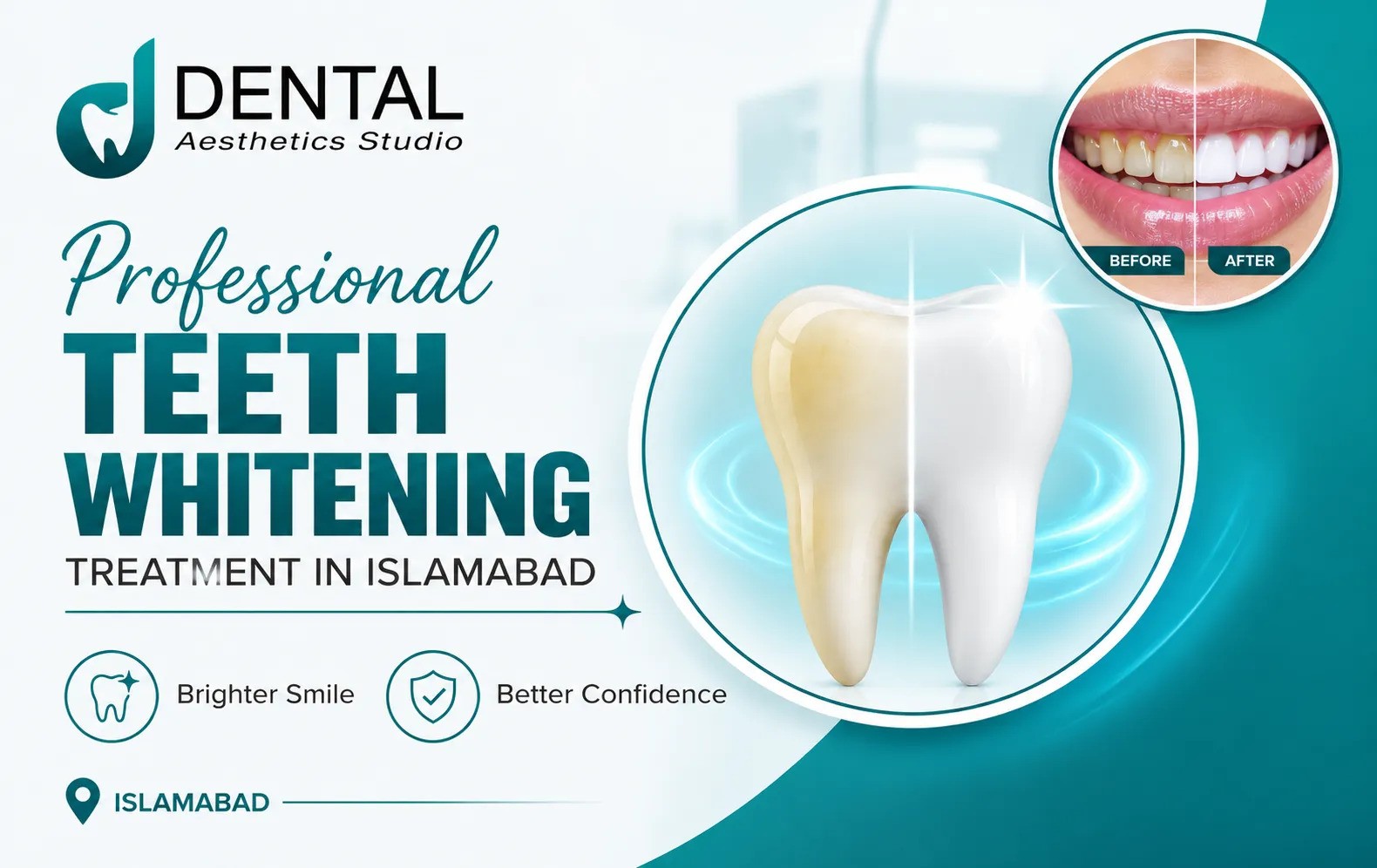
Teeth Whitening Before and After: What Results Can You Expect?
Teeth whitening is a popular cosmetic dental treatment for people who want to reduce discoloration and achieve a brighter smile. Before treatment, teeth may appear yellow, dull, or stained because of aging, coffee, tea, tobacco, foods, and other lifestyle factors. After professional whitening, many patients notice a visible improvement in tooth brightness.If you are considering professional teeth whitening in Islamabad, understanding what happens before and after treatment can help you develop realistic expectations. The final result depends on your natural tooth color, the type of stains present, your oral health, and the whitening method used.
What Does Teeth Whitening Do?:
Teeth whitening is designed to lighten the natural color of teeth and reduce visible stains. Professional whitening products commonly contain peroxide-based ingredients that help break down stain molecules.
The treatment focuses on natural tooth structure. It does not permanently prevent new stains and does not generally change the color of crowns, veneers, bridges, or fillings.
The amount of whitening achieved differs between patients, so your dentist can explain what level of improvement may be realistic before treatment.
What Should You Expect Before Teeth Whitening?:
Before professional whitening, your dentist will generally examine your teeth and gums. This assessment helps determine whether whitening is suitable for you.
The dentist may check for cavities, gum disease, enamel wear, cracks, sensitivity, and existing dental restorations. If you have an untreated dental issue, it may need to be addressed before whitening.
Your dentist may also discuss your current tooth shade and desired outcome. This allows you to understand what type of result is realistically achievable.
What Do Teeth Look Like Before Whitening?:
Before whitening, teeth can appear different shades depending on genetics, age, oral hygiene, and lifestyle.
Common concerns include:
Yellowish teeth
Brown surface stains
Coffee and tea discoloration
Tobacco stains
Dull-looking enamel
Uneven tooth color
Age-related darkening
Not all discoloration has the same cause. Surface stains may respond particularly well to whitening, while deeper intrinsic stains can be more challenging.
How Is Professional Whitening Performed?:
During professional whitening, the dentist prepares the teeth and protects the gums and surrounding tissues. A professional whitening product is then carefully applied to the tooth surfaces.
Depending on the whitening system, the product may be applied for a specific period and may involve multiple application cycles. Some systems may also use a specialized light as part of the treatment.
The exact procedure varies depending on the whitening system and the patient's individual needs. Professional supervision allows the dentist to monitor the treatment and address sensitivity concerns.
What Results Can You Expect After Whitening?:
After treatment, many patients notice that their natural teeth look visibly brighter. The improvement may range from a subtle change to several shades of whitening depending on the original tooth color and type of staining.
The final result is influenced by factors such as:
Starting tooth shade
Type of discoloration
Enamel condition
Whitening system
Treatment duration
Lifestyle habits
Oral hygiene
It is important to remember that professional whitening cannot guarantee the same shade for every person.
Does Whitening Remove All Stains?:
Professional whitening can improve many surface stains, but it does not remove every type of discoloration.
Stains caused by coffee, tea, tobacco, and certain foods may respond well to whitening. However, intrinsic stains caused by trauma, certain medications, fluorosis, or changes within the tooth may respond less predictably.
If deeper discoloration remains after whitening, your dentist may discuss alternative cosmetic treatments such as bonding or veneers.
How Many Shades Can Teeth Improve?:
Professional whitening can often lighten natural teeth by several shades, although the exact improvement varies between individuals.
A patient with moderate surface staining may experience a noticeable transformation, while someone with deep intrinsic discoloration may see less dramatic results.
Rather than focusing only on a specific number of shades, the overall appearance of your smile should be considered. A bright, natural-looking result is generally more desirable than an excessively white appearance.
Is Tooth Sensitivity Normal After Whitening?:
Some patients experience temporary tooth sensitivity after professional whitening. You may notice sensitivity when consuming cold, hot, sweet, or acidic foods and beverages.
People who already have sensitive teeth may be more likely to experience this effect. Inform your dentist about existing sensitivity before treatment so the whitening approach can be adjusted if necessary.
Sensitivity is generally temporary, but severe or persistent discomfort should be discussed with a dental professional.
How Much Does Teeth Whitening Cost?:
The cost of professional whitening varies depending on the clinic, whitening method, number of sessions, products used, and individual dental requirements.
If you are comparing teeth whitening prices in Pakistan, consider the complete treatment rather than choosing solely based on the lowest price. The cost may include consultation, dental assessment, professional whitening, and aftercare recommendations.
A dental consultation can provide a more accurate estimate based on your specific needs.
How Long Do Whitening Results Last?:
Professional whitening does not permanently protect teeth from future staining. Results can remain noticeable for months or longer, depending on your diet, oral hygiene, tobacco use, and natural tooth characteristics.
Frequent consumption of coffee, tea, red wine, cola, and strongly colored foods may cause stains to return more quickly.
Good oral hygiene and sensible lifestyle choices can help maintain the results for longer.
What Should You Avoid After Teeth Whitening?:
Immediately after whitening, your dentist may recommend limiting foods and drinks that are strongly pigmented.
These may include:
Coffee
Tea
Red wine
Cola
Dark sauces
Berries
Colored candies
Tobacco products
Drinking water after meals and maintaining regular brushing can help reduce the buildup of new stains.
You do not necessarily need to avoid these foods permanently, but reducing frequent exposure can help preserve your results.
Can Crowns and Veneers Be Whitened?:
Whitening affects natural tooth structure and does not generally change the color of crowns, veneers, bridges, or many fillings.
If you have visible dental restorations, your dentist should evaluate them before whitening. Otherwise, your natural teeth may become lighter while your restorations remain the same shade.
This can create a noticeable difference, particularly when restorations are located on the front teeth.
How Can You Maintain Before-and-After Results?:
Good oral hygiene is essential for maintaining your brighter smile. Brush twice daily with fluoride toothpaste and clean between your teeth regularly.
Regular dental checkups and professional cleanings can help control plaque and tartar. Limiting frequent exposure to staining foods and drinks can also help preserve your whitening results.
At Dental Aesthetics Studio, patients can discuss their cosmetic dental goals and learn about suitable options for improving the appearance of their smiles.
Are Teeth Whitening Results Permanent?:
No, whitening results are not permanent. Natural teeth continue to encounter food pigments, drinks, bacteria, and lifestyle factors after treatment.
Over time, your teeth may gradually become darker again. Some patients may benefit from dentist-recommended maintenance treatments, depending on their individual needs.
However, whitening should not be performed excessively. Following professional recommendations can help reduce unnecessary sensitivity and irritation.
What Makes a Good Teeth Whitening Result?:
A successful whitening result is not simply about achieving the brightest possible shade. A good result should look natural, even, and appropriate for your overall smile.
Your dentist should consider your natural tooth color, existing restorations, facial features, and cosmetic expectations when planning treatment.
Professional assessment can help ensure that your whitening goals are realistic and appropriate for your dental health.
Final Thoughts:
Teeth whitening before and after results can vary considerably between patients. Professional whitening may produce a noticeable improvement in tooth brightness and can reduce many common surface stains caused by food, beverages, tobacco, and aging.
The best way to understand your potential result is to have your teeth examined by a qualified dental professional. With appropriate treatment, good oral hygiene, and sensible aftercare, you can maintain a brighter and more confident smile for longer: 2026-8-21 18:19 Neem Karoli Baba | Spiritual Legacy, Teachings and Hanuman Ansh Oman Air Sydney Office +1-888-738-0817 JellyBoost Gummies JellyBlue Gummie Screw Manufacturer in India for Diverse Applications What should I consider before renting a flat in Malcha? Buy Diamond Jewellery on EMI The Ultimate Guide to Mrsool Clone App Development https://www.facebook.com/Dr.Oz.SodaTide/ 123b1jpnet https://www.facebook.com/AnkalaxMassageTherapy/ b52club2nycom Selenium Course