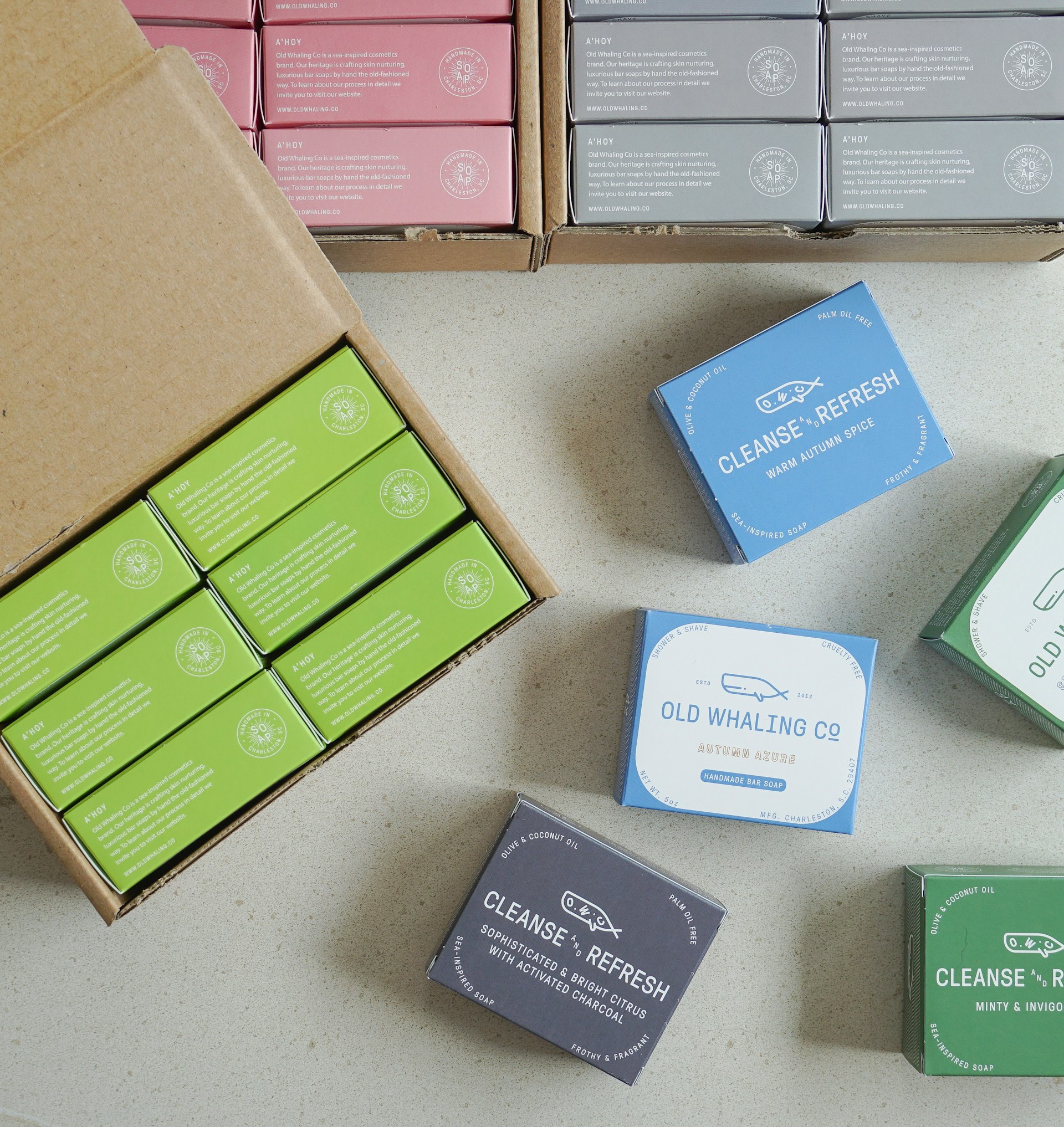
Soap Packaging for Eight Different Kinds of Soap Business
No two soap businesses run the same way. A maker selling forty bars a month at a farmers market has almost nothing in common operationally with a brand supplying two hundred hotel rooms, and a zero-waste refill shop is working against a completely different set of priorities than a shave label selling premium tins. Yet most packaging advice treats all of them as one audience.Your business model decides nearly everything about packaging. It sets how many units you order, how much each one can cost, how far they travel, how long they sit in storage, and who is standing there when the wrapper comes off. A box that suits a luxury botanical label would sink a subscription brand's margins, and a wrapper that works beautifully for everyday bars would undersell a gift set.
Choosing Soap Boxes with your model in mind means you spend where it counts and skip what you don't need. As you read, look for the profile closest to your own — and note that many brands recognise themselves in two or three, which is useful information in itself, because mixing formats is usually smarter than standardising on one.
Whatever the model, a few things hold throughout:
The bar should not be able to shift, because cured soap chips at the edges
Packaging should let a curing bar breathe rather than sealing it
The material should match what you claim about your ingredients
Scent, ingredients and weight should be easy to read without opening anything
1. The Kitchen-Table Maker
Who they are: Independent soap makers producing in small batches at home or in a small workshop, selling at markets, craft fairs, and through their own site or social accounts. Customers are buying the person as much as the product.
What they need: Packaging that looks considered without a large upfront order, that works in batches of fifty rather than five thousand, and that agrees with a handmade, ingredient-led story.
A strong match: Kraft Soap Boxes suit this profile almost perfectly. The natural unbleached board reads as honest rather than manufactured, which is exactly the claim these makers are making, and it looks finished with no printing at all — so a rubber stamp, a sticker, or a handwritten label is enough. Uncoated board also breathes, which matters for cold-process bars still releasing moisture.
Ideas for kitchen-table makers:
Buy plain stock and brand in small batches as you go
Print scent, oils and cure date on a simple label rather than the box
Use paper tape or twine instead of plastic
Keep a matching row at market stalls — uniformity builds trust fast
2. The Zero-Waste Shop
Who they are: Refill stores, plastic-free retailers, and brands built specifically around low-waste principles. Their customers frequently arrive already informed and ask direct questions about materials.
What they need: The least packaging that still does the job, in materials they can describe accurately and without hedging.
A strong match: Soap Sleeves are the natural fit. A simple paper band leaves most of the bar exposed, which is both the lowest-material option available and a visible statement of intent. Customers can see and smell the soap through the open sides, and the sleeve itself is uncoated paper — straightforward to recycle and often compostable.
The trade-off is real and worth stating: sleeves protect the least. They suit sturdy, simply shaped bars and careful handling far better than delicate or heavily textured ones.
Ideas for zero-waste sellers:
Confirm coatings and inks with your supplier in writing before making claims
Choose soy-based or vegetable-based inks
Print disposal instructions rather than vague symbols
Stock unwrapped bars loose alongside sleeved ones for the fully packaging-free option
3. The Wholesale Brand
Who they are: Soap makers whose growth comes from stockists — gift shops, pharmacies, garden centres, independent grocers. Their packaging has to work on someone else's shelf, beside competitors, with no one there to explain it.
What they need: Immediate visual appeal, clear information, and enough structure to survive being handled repeatedly by browsing shoppers.
A strong match: Soap Boxes with Window do the selling that you cannot do in person. A cutout shows colour, texture, layering and botanical inclusions — dried petals, oats, poppy seed, clay swirls — without anything being opened. Shoppers who can see the actual bar buy more readily than those asked to trust a photograph, and an open die-cut window lets a little scent escape, which on a shelf does more work than any sign.
Ideas for wholesale brands:
Put your most visually distinctive bars behind the window, not just your bestsellers
Keep design consistent across the range so a full facing reads as one brand
State scent, weight and key ingredients where a shopper can read them at arm's length
Consider an open window rather than film, so retailers can honestly call it recyclable
4. The Subscription Box
Who they are: Brands shipping a curated set of bars monthly or quarterly, often mixing scents, and building their business on retention rather than one-off sales.
What they need: Packaging that survives repeated transit unaided, keeps individual bars separated so scents don't blur, and makes each delivery feel like an occasion rather than a restock.
A strong match: Holster Soap Boxes hold each bar closely, which does two jobs at once. The snug fit stops bars shifting and scuffing in a shared parcel, and the close casing slows scent migration between different soaps travelling together. Sliding a bar out of a fitted holster also gives a small, satisfying reveal — repeated monthly, that becomes part of what people are subscribing to.
Ideas for subscription brands:
Size the holster to the bar you actually cut, not the mold dimension
Pack strong and mild scents at opposite ends of the parcel
Include a card naming each bar, its oils and its cure date
Vary print or colour by month so the set is collectable
5. The Grooming and Shave Label
Who they are: Brands selling shave soaps, beard bars and grooming ranges, typically at higher price points, often to customers who take the ritual seriously.
What they need: Packaging that feels substantial, survives a bathroom shelf, and ideally stays useful after the soap is gone.
A strong match: Soap Tins are the established answer here, and for good reason. Metal construction feels weighty in the hand, the lid gives a controlled open, and a shave soap in a tin is genuinely easier to use than one that has to be transferred to a bowl. Because tins are durable, customers keep them — as travel cases, as dishes, as storage for small things — which leaves your brand sitting on a shelf long after the bar is finished.
Ideas for grooming labels:
Choose a lid that closes well; hardware matters more than print here
Offer a refill bar sized to the tin the customer already owns
Print short usage notes inside the lid
Keep the exterior restrained — this category rewards understatement
6. The Gift and Occasion Retailer
Who they are: Sellers whose soap is mostly bought for someone else — wedding favours, hampers, Christmas sets, thank-you gifts. Presentation is doing a large share of the work.
What they need: Packaging that can be handed over without rewrapping, that holds multiple bars neatly, and that leaves room for the buyer to add a message.
A strong match: Homemade Soap Boxes in recyclable board sit well here — sturdy enough to present a set, printable enough to carry occasion design, and inexpensive enough that a multi-bar gift stays affordable. Leave space inside the lid for a handwritten note and the box becomes something the buyer adds to rather than replaces.
Ideas for gift retailers:
Build sets around a theme rather than a discount
Offer a plain outer mailer so a gift can ship directly to the recipient
Include a care card so the bars last through a long gifting season
Order occasion stock months ahead, not weeks
7. The Travel and Amenity Supplier
Who they are: Brands supplying hotels, guesthouses, spas and short-let hosts, usually with small-format bars in high volume.
What they need: Minimal material, low unit cost, compact storage, and enough protection to survive being stacked in a linen cupboard for months.
A strong match: Sleeves again, or small fitted holsters where the bar is shaped or embossed. The deciding factor is volume: at amenity quantities, a few pence per unit is the whole margin. Keep the format small, flat-packing, and simple to assemble, because someone is assembling several hundred at a time.
Ideas for amenity suppliers:
Standardise on one bar size across the whole contract
Print the property's name if they want it, your own if they don't
Specify uncoated stock so bars stored long-term can breathe
Check how the wrapper behaves in a steamy bathroom before committing
8. The Luxury Botanical Apothecary
Who they are: Premium brands with high-value ingredients, small runs, and customers who expect the whole experience to match the price.
What they need: Packaging that confirms the price before the bar is even seen, and that photographs as well as it feels.
A strong match: Tins at the top of the range, and window boxes where the bar itself is the argument — a hand-cut botanical bar with visible inclusions sells itself through a cutout better than through any description. Restraint is the rule: black, ivory, deep green, minimal type.
Ideas for premium labels:
Let the ingredient list be the design rather than decorating around it
Keep the palette narrow and hold it across every product
Reserve special finishes for limited or seasonal runs
Sample before scaling — at this price point, a flawed box is worse than a plain one
When You Fit More Than One Profile
Most soap businesses blend these. A kitchen-table maker also sells wedding favours. A wholesale brand also runs a subscription. A zero-waste shop also stocks a premium gift set at Christmas.
A tiered approach handles that cleanly:
Entry: sleeves for everyday and simply shaped bars
Core: kraft, window or holster boxes for your main range
Premium: tins and gift boxes for sets, seasonal runs and high-value bars
Keep your logo, colours and typefaces identical across all three, so the tiers read as one brand at different price points rather than three unrelated suppliers.
Conclusion
The right packaging follows from how your business actually works. Kitchen-table makers are well served by Kraft Soap Boxes, and zero-waste sellers by Soap Sleeves. Wholesale brands win shelf attention with Soap Boxes with Window, and subscription brands protect mixed parcels with Holster Soap Boxes. Grooming labels build reuse into Soap Tins, gift retailers present sets in Homemade Soap Boxes, and amenity suppliers and premium apothecaries adapt those same formats to volume and to price. Match the packaging to the model, and every bar arrives protected, priced sensibly, and unmistakably yours. 2026-9-21 18:26 1-844-962-3246 Delta Airlines AMS Terminal Best Interior Designer In Delhi NCR: Dream Homes Await Explore Indian Entertainment Trends And Search Interests When Does IT Staff Augmentation Actually Make Sense Over Full Time Hires Ein Abend mit kostenlosen Online Slots: So planen Sie Ihre Entdeckungstour How a Dentist Can Prevent Common Dental Problems Can Gastric Bypass Reduce Obesity Complications? How a Dentist Can Prevent Common Dental Problems Yono Rummy Game All Safe Driver for Corporate Functions Bonomi Butterfly Aer Lingus Airlines BOS Terminal +1-888-738-0817 https://www.facebook.com/KeiliniHeaterPro