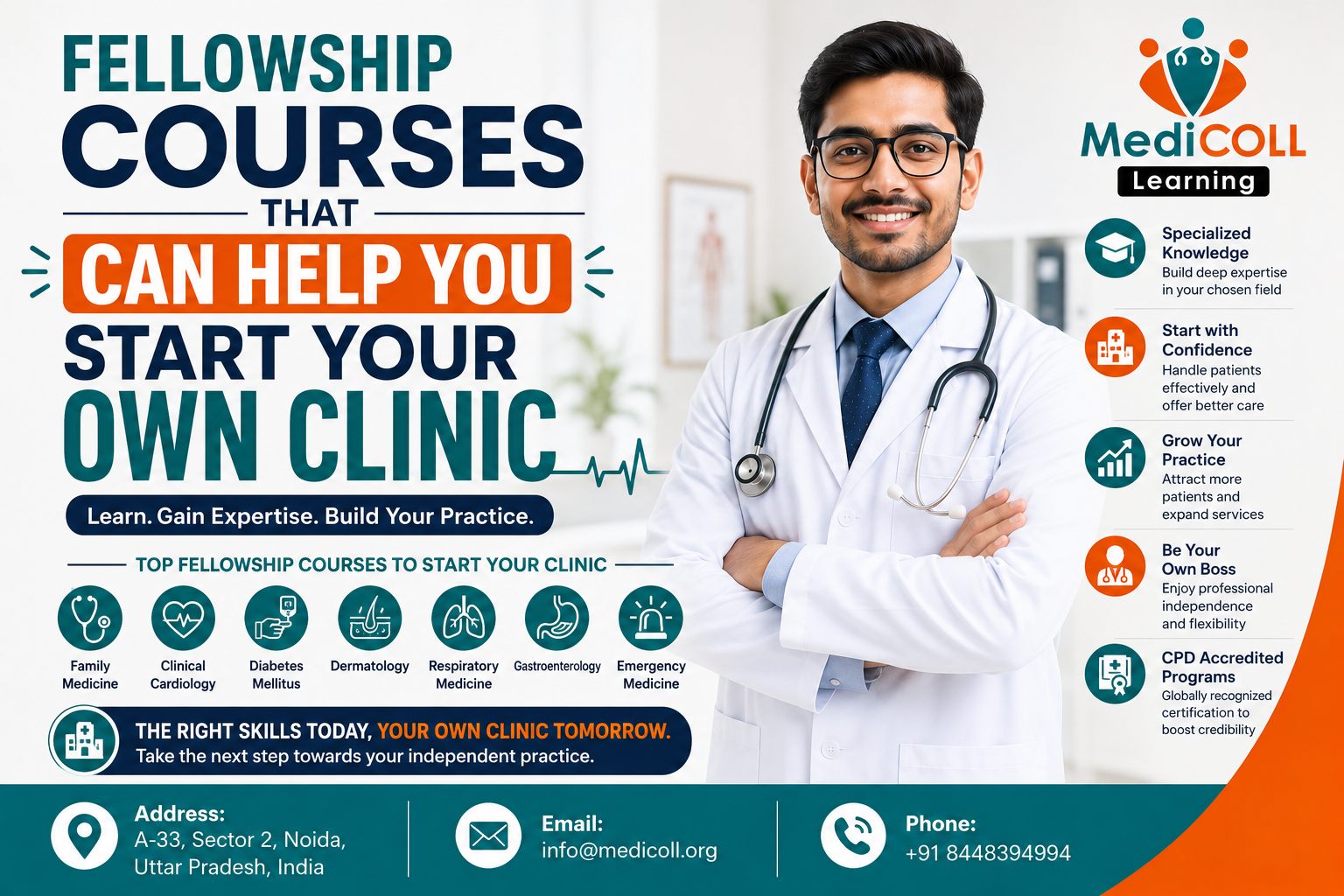
Fellowship Courses That Can Help You Start Your Own Clinic
IntroductionAfter completing graduation degrees like MBBS or postgraduate training, many doctors start thinking about building a practice of their own. A clinic offers independence, a different pace of work, and a closer relationship with patients. But opening one involves considerably more than finding a space and putting up a signboard.
A well-chosen fellowship after MBBS can strengthen knowledge and skills in a particular area and may help a doctor decide what kind of practice they actually want to build. Additional qualifications like fellowship is one part of that preparation along with registration, or the regulatory requirements every clinic plan eventually has to meet.
Table of Content
1. What Starting a Clinic Actually Involves
2. Where a Fellowship Can Genuinely Help
3. Fellowship Areas Worth Considering
4. Clinical Skills Still Matter More Than the Certificate
5. What Else You Need Before Opening
6. Conclusion
What Starting a Clinic Actually Involves?
Starting a own clinic after MBBS includes an appropriate medical qualification and registration, a defined scope of practice, applicable clinical establishment requirements, suitable premises and equipment. In addition to this, proper patient records, infection prevention practices, biomedical waste management, emergency preparedness, and the professional and ethical responsibilities come with independent practice.
The Clinical Establishments Act, 2010 specifically covers clinics and provides for registration and minimum standards, though the exact requirements depend on the state or union territory a doctor is practising in, since not every state has adopted the central Act the same way.
Where a Fellowship Can Genuinely Help?
Among the various fellowship courses for doctors available today, a well-chosen one can support a doctor's knowledge and skill development well before they open a practice. This might mean developing focused clinical knowledge in an area, strengthening decision-making around a particular patient population, becoming more comfortable with common presentations in a specialty, or simply helping a doctor identify what kind of services they're genuinely interested in offering within their qualifications and scope.
Fellowships from a recognised platform help the medical professionals to gain the expertise and act as a stepping stone for further career opportunities. Also, it supports the preparation that goes into building a focused, competent practice.
Fellowship Areas Worth Considering
When considering the best fellowship courses after MBBS, the right choice depends largely on the kind of practice a doctor has in mind. A fellowship in diabetes or metabolic health can support practices built around long-term monitoring, lifestyle counselling, and metabolic risk assessment.
A clinical fellowship after MBBS in nutrition can strengthen knowledge around nutrition assessment and diet-related risk factors in chronic disease. Preventive and lifestyle medicine fellowships suit practices focused on risk assessment and weight management.
Fellowships with a focus on women's health can support relevant knowledge within a doctor's recognised scope. Aesthetic or dermatology-focused medical fellowship courses can provide additional learning about selected aspects of skin, hair and nail health.
Such a course can add useful learning in various concepts or procedures, but it still has to stay within the doctor's actual qualifications and applicable regulations. Searches for clinical courses for MBBS doctors often reflect this same interest, gaining focused knowledge before committing to a particular kind of practice.
Clinical Skills Still Matter More Than the Certificate
A certificate alone does not replace the clinical fundamentals. History-taking, physical examination, clinical reasoning, documentation, communication, and recognising when something needs urgent escalation all matter more in a clinic. A doctor needs to recognise which patients can be managed appropriately within the clinic and which need investigation, referral, or urgent escalation, often without the immediate backup a hospital setting provides.
Good clinical judgement also means knowing when not to treat a patient independently. Clear documentation, appropriate follow-up, timely referral, and explaining treatment options in a way patients understand are all part of running a safe practice. A doctor should also ensure that their practice remains within their qualifications, training and applicable regulations.
What Else You Need Before Opening?
Beyond the fellowship and the clinical competence, a doctor planning a clinic still needs to work through practitioner registration and any applicable clinical-establishment registration, appropriate premises and equipment, proper medical records, infection-control processes, biomedical waste arrangements, emergency and first-aid preparedness, staff responsibilities, and any local or state permissions that apply.
Among the various courses after MBBS or medical courses after MBBS, some focus purely on clinical knowledge, while setting up a clinic also means engaging with these administrative and regulatory steps directly, since they vary by location and by the services actually being offered. This is one of the more overlooked parts of starting a clinic, and it's worth researching properly rather than assuming what a medical course actually entails.
A doctor also needs to think about what the clinic will offer and whether the space, equipment, staff and systems are suitable for those services. Even a small clinic needs a proper system for appointments, patient records, follow-up, referrals and emergencies. These are easy to overlook while setting up the clinic, but they become part of the doctor's daily work once patients start coming in.
MediCOLL Learning offers fellowship and certificate courses for healthcare professionals looking for structured learning in focused areas of medicine, and programmes like these can support a doctor's professional development while they plan their longer-term direction. Doctors researching the best courses for private practice may consider structured fellowship learning as one part of their professional development, alongside the registration and regulatory groundwork involved in running a clinic.
Conclusion
For doctors asking how to start a clinic after MBBS, the answer involves more than having the right qualification. The clinic itself needs to meet the applicable regulatory requirements and have appropriate emergency equipment and arrangements. A doctor also needs registration and genuine clinical competence to practise safely. A well-chosen fellowship can be one part of that preparation, strengthening knowledge in a focused area and helping shape a doctor's direction, but it works alongside the qualifications and regulatory groundwork, not in place of them. 2026-8-17 20:25 Best Matrimonial Lawyer in Dehradun EasyJet Headquarters: Corporate Office Guide for Travelers Expert WordPress SEO Consultant: Scale Your Organic Traffic Fast MedicGLP Review: Does It Really Work? Supporting Travel Plans Across Venezuela How long do pending transactions usually take to be normal? GST Registration Services in Mumbai | Mohit S. Shah & Co Clearer Insurance Communication with an AI Rewording Assistant What to Look for in Quality Adult Care Products Today Top Rated Restaurants in Boise Idaho You Must Try B52 CLUB1COM Philippine Airlines JFK Terminal Guide: Everything You Need to Know Shop the Best Spider-Man Outfits at NY Jacket