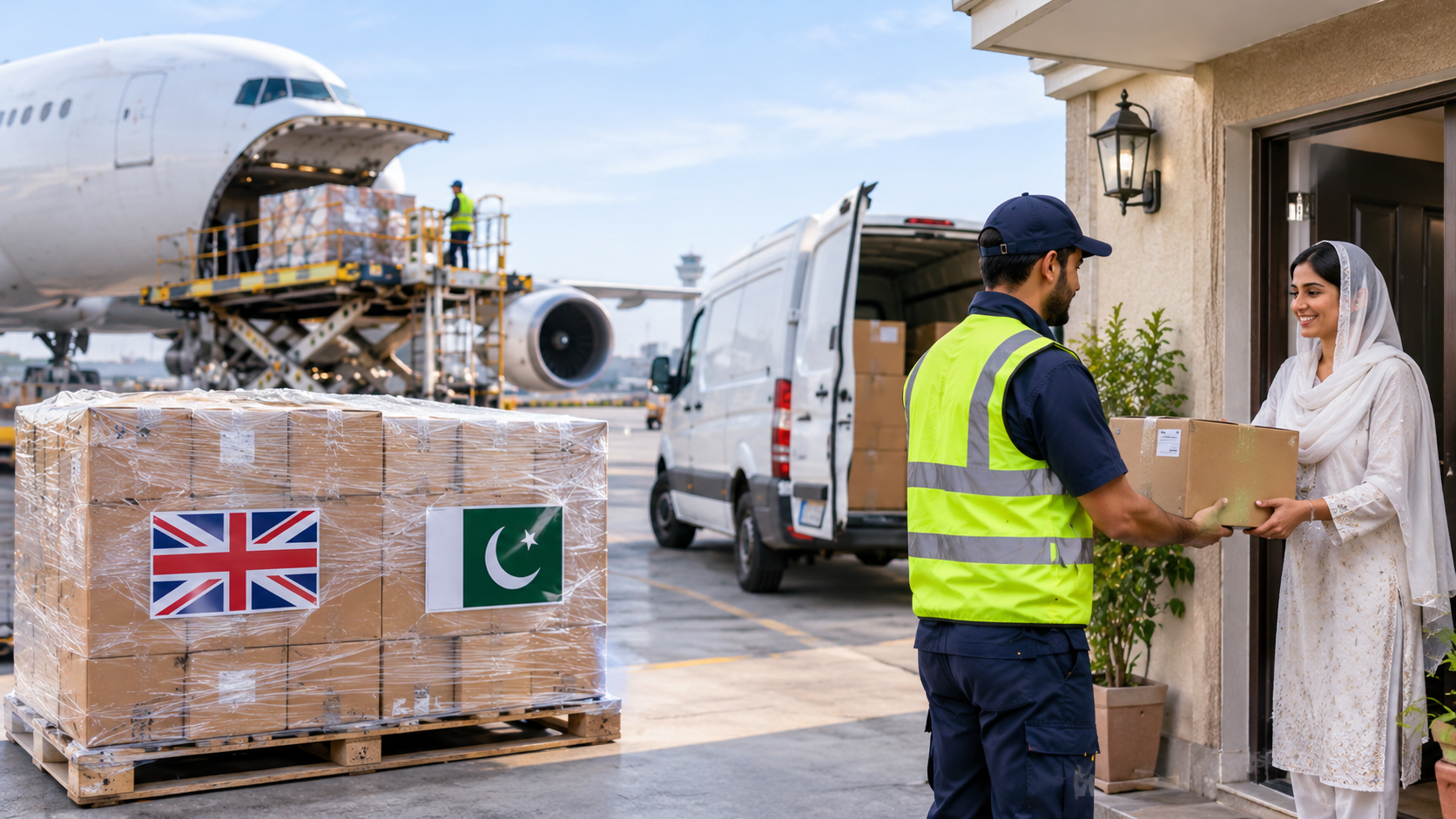
Can Shipping UK to Pakistan Include Collection and Delivery?
A student moving back to Pakistan has accumulated more belongings than can fit into a suitcase. There are books, kitchen items, winter clothes, and a few personal possessions that need to reach the family home. The sender does not own a suitable vehicle, and the recipient cannot easily travel to a cargo terminal to collect several boxes.This is where the arrangement between a sender, a cargo provider, and a receiving party becomes important. International shipping can involve more than moving goods between two countries. Some providers coordinate the collection point, transport arrangements, destination handover, and final address delivery through one service agreement.
Who Is Responsible for Each Part of the Shipment?
A shipment involving several locations needs clear responsibilities. The sender prepares the goods and supplies accurate information. The cargo provider arranges the agreed transport stages, while the recipient makes sure someone is available to receive the shipment.
Problems can arise when these responsibilities are unclear. For example, a sender may assume that unloading is included, while the provider's quotation only covers transportation to the delivery address. Agreeing on these details beforehand prevents misunderstandings.
Can One Booking Connect a UK Address With a Pakistani Address?
Yes, some logistics providers coordinate the complete journey rather than asking customers to arrange separate transport at both ends. When booking shipping from the UK to Pakistan, a sender can ask whether one service agreement covers residential collection, international movement, destination coordination, and delivery to the recipient's address.
This arrangement can be particularly useful for people sending several packages from different parts of a household. However, the provider should confirm the collection area, delivery coverage, and any conditions that apply to the final handover.
What Happens When the Collection Address Is Difficult to Access?
Not every pickup takes place outside a property with easy vehicle access. Some homes have narrow streets, restricted parking, shared entrances, or buildings where drivers cannot reach the front door.
These details can affect how collection is arranged. A sender should explain the access situation when booking and ask whether the driver can collect from the property entrance or whether the packages need to be brought to a nearby accessible point.
Useful details to share include:
* Whether a vehicle can stop near the property.
* Whether the building has stairs or a lift.
* Whether the packages are unusually large.
* Whether assistance is needed to move the goods.
* Whether collection must take place during specific hours.
* Whether parking restrictions apply.
Discussing these points early helps the provider plan a realistic collection appointment.
Can Sea Freight Be Arranged From the Sender's Home to the Recipient?
Sea transport does not necessarily mean that customers must take their goods directly to a port. Depending on the provider's service, sea cargo from the UK to Pakistan can begin with residential collection and continue through warehouse handling, port arrangements, ocean transport, and destination delivery.
The important distinction is between the sea freight itself and the additional services around it. A quotation may cover the international journey but exclude collection, unloading, customs-related expenses, or local delivery. Ask for the complete route and cost breakdown before choosing the service.
What If the Recipient Lives Outside a Major Delivery Area?
A destination address can influence the final part of the journey. Delivering to a town with regular transport connections may involve different arrangements from delivering to a remote village or a property with limited vehicle access.
Some providers have wider delivery networks than others. Others may deliver to a nearby service point and ask the recipient to arrange the remaining distance. The sender should provide the full postcode or address and ask whether the exact location is covered.
Why Should Senders Ask About Unloading?
Transportation to an address and unloading goods are not always the same service. A delivery vehicle may arrive at the property, but the driver may not be responsible for carrying every box inside the building.
This can matter when a shipment contains heavy furniture, appliances, or a large number of cartons. Before confirming the booking, ask:
* Is delivery made to the property entrance?
* Is carrying goods inside included?
* Is unloading assistance available?
* Are heavy items subject to separate charges?
* Does the recipient need to arrange extra help?
* Are there restrictions on vehicle access?
These questions help the recipient prepare for the actual handover.
How Should Fragile or Valuable Belongings Be Handled?
Some shipments need more attention than ordinary cartons. Glassware, framed pictures, electronic equipment, and delicate household items may require suitable internal protection and clear handling instructions.
The sender should discuss fragile goods before the collection date. They should also ask whether the provider accepts the items, what packaging standards apply, and whether any additional protection or declared-value arrangements are available. Do not assume that a fragile label alone guarantees special handling.
What Should Happen When a Delivery Appointment Changes?
A recipient may be unavailable because of work, travel, or an unexpected commitment. If the delivery team arrives and nobody can receive the goods, another appointment may be necessary.
A clear communication process helps avoid repeated visits. The sender should provide a reachable recipient contact and ask how missed deliveries are handled. It is also useful to know whether storage or redelivery fees may apply if the original appointment cannot be completed.
How Can Customers Compare Different Collection and Delivery Offers?
Two companies may use similar descriptions for their services while covering different parts of the journey. Comparing the actual arrangements is more useful than relying on labels alone.
* Check whether collection is from the property or a nearby point.
* Confirm the international transport method.
* Ask who coordinates destination handling.
* Verify delivery to the exact address.
* Clarify whether unloading is included.
* Check the procedure for missed appointments.
* Ask about remote-area delivery limitations.
* Request all additional charges in writing.
A detailed comparison helps customers choose a service that matches their practical needs.
What Should Be Confirmed Before the Goods Leave?
Once the shipment has been collected, changing its destination or service arrangements may be difficult or may involve additional charges. That is why the sender should review the booking before the driver arrives.
Confirm the recipient's full address, phone number, package count, agreed services, and delivery conditions. Keep the booking reference and written quotation available. If the recipient has special access requirements, make sure the provider has received that information too.
Comparison Table: Questions to Ask About Collection and Delivery
Situation What to ask the provider Why it matters
Difficult pickup location Where will the driver collect the goods? Avoids collection confusion
Remote destination Is the full address covered? Clarifies delivery limits
Heavy packages Is unloading assistance included? Helps the recipient prepare
Fragile belongings What protection is required? Reduces handling risks
Missed appointment Can delivery be rearranged? Clarifies the next steps
Additional services Which charges are separate? Prevents unexpected costs
Frequently Asked Questions
1. Can a cargo provider collect goods from an upstairs flat?
Some providers can collect from flats, but stairs, lifts, package size, and available assistance may affect the arrangement. Explain the building access before booking.
2. Will the driver carry boxes inside the recipient's home?
Not necessarily. Some services cover delivery to the property entrance only. Confirm whether carrying goods indoors is included or requires a separate arrangement.
3. Can a shipment be delivered to a village in Pakistan?
This depends on the provider's delivery network and local transport arrangements. Share the complete destination address to check whether direct delivery is available.
4. What happens if nobody is available to receive the shipment?
The provider may arrange another delivery attempt or an alternative collection arrangement. Ask whether storage or redelivery fees apply.
5. Should collection and delivery conditions be written into the quotation?
Yes. Written terms make it easier to understand what the provider has agreed to arrange, including access, unloading, delivery coverage, and additional charges.
Final Thoughts
An international shipment can involve practical challenges that have little to do with the distance between two countries. Building access, remote addresses, heavy packages, unloading arrangements, and recipient availability can all affect how collection and delivery work. These details deserve attention before the goods leave the sender's property.
A well-defined service agreement makes the responsibilities of the sender, provider, and recipient much clearer. It also helps prevent disagreements about what was included in the original booking. 2026-11-4 16:42 789CLUB SEMAIL FIVE88 AJPNCOM VICCLUB COMPANY EL AL Airlines Jakarta Office in Indonesia Custom Boxes and Packaging for Apparel Stores: Beyond the Basic Mailer How to Play and Enjoy UNO Online: A Beginner's Guide 1xBet Code Promo Aujourd’hui : CODE1X200 – 130 € Offerts Free Promo Code: A Guide to Finding and Understanding Online Gaming Offers Lip Gloss: Add a Touch of Shine and Beauty to Your Everyday Makeup Look BmrpultyBtjOrarkovcq BmrpultyBtjOrarkvjhv BmrpultyBtjOrarkpbkl BmrpultyBtjOrarkowsk