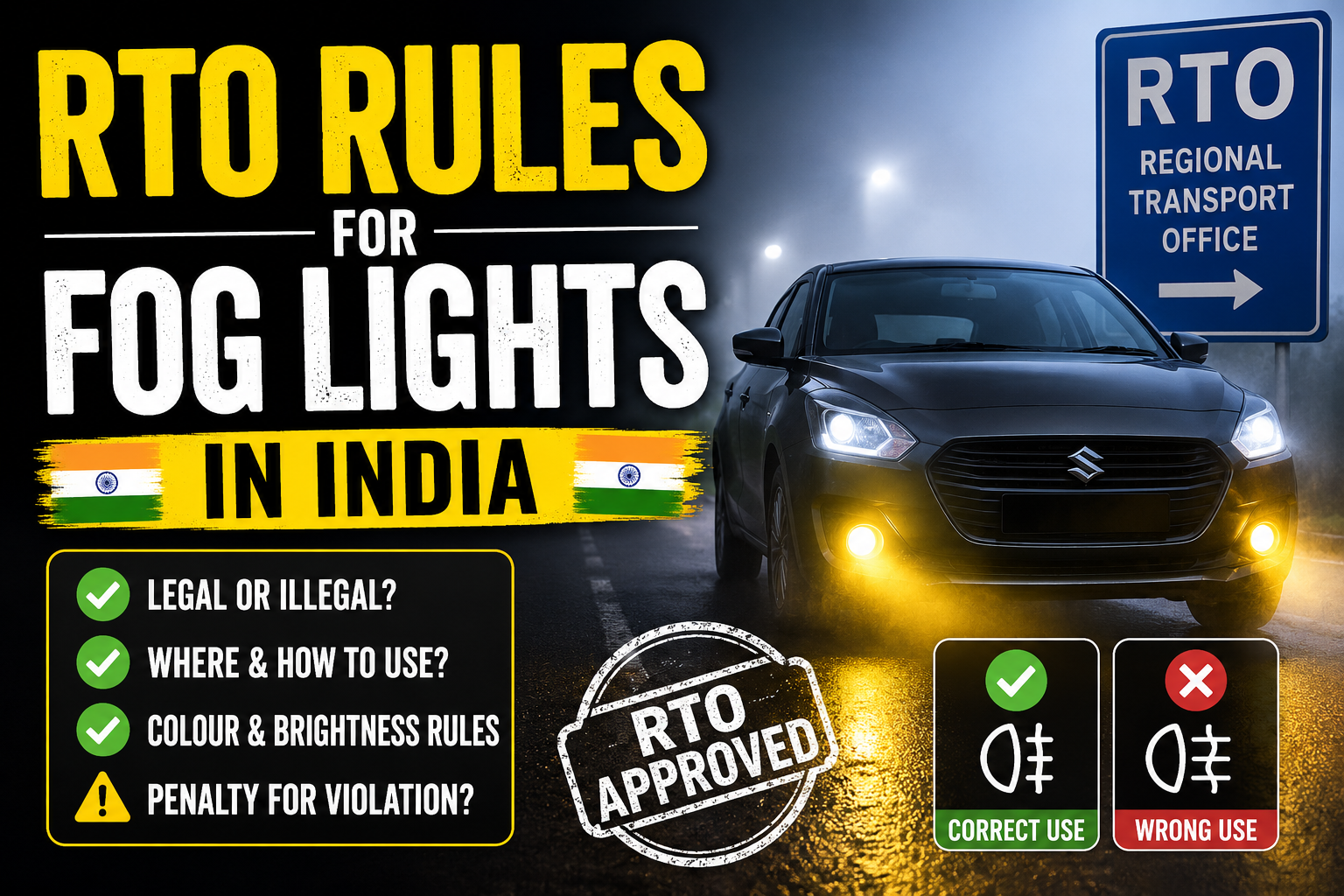
subject: RTO Rules for Fog Lights in India: Regulations, Usage, and Safety Tips [print this page]
Fog lights are an important vehicle safety feature designed to improve visibility during adverse weather conditions such as dense fog, heavy rain, and snowfall. They help drivers see the road more clearly when standard headlights become less effective. However, many vehicle owners install aftermarket fog lights or use them incorrectly without understanding the rules governing their use.
In India, the Regional Transport Office (RTO) and traffic authorities regulate vehicle lighting to ensure road safety and prevent inconvenience to other road users. Improper use of fog lights, especially high-intensity or unauthorized lights, can reduce visibility for oncoming drivers and may even result in penalties.
In this article, you'll learn about the RTO rules for fog lights in India, when they should be used, the legal requirements, and best practices for safe driving.
## What Are Fog Lights?
Fog lights are auxiliary vehicle lights installed lower than the main headlights. Their purpose is to illuminate the road surface during poor visibility conditions without causing excessive glare.
Unlike standard headlights, fog lights project a wide, low beam that reduces light reflection from fog, mist, or heavy rain. This allows drivers to see lane markings, road edges, and nearby obstacles more effectively.
Most modern vehicles are available with factory-fitted front fog lights, while some premium models also include rear fog lights.
## Are Fog Lights Legal in India?
Yes, fog lights are legal in India when they comply with applicable vehicle standards and are used appropriately.
Factory-installed fog lights supplied by vehicle manufacturers generally meet the required safety specifications. Vehicle owners may also install compatible fog lights, provided they comply with the applicable regulations and do not create unnecessary glare or distraction for other road users.
However, unauthorized modifications, excessively bright lighting systems, or improper installation may violate traffic regulations and attract enforcement action.
## RTO Rules for Using Fog Lights
Although specific enforcement practices may vary across states, the following general rules are widely applicable.
### Use Fog Lights Only When Necessary
Fog lights are intended for conditions where visibility is significantly reduced due to fog, mist, heavy rain, or similar weather.
Using them continuously during clear weather is discouraged because the bright, low-mounted beams can distract or inconvenience other drivers.
### Avoid High-Intensity Unauthorized Lights
Installing extremely bright aftermarket LEDs or HID fog lights that exceed approved specifications may not comply with vehicle regulations.
Drivers should always use lighting equipment that meets the standards applicable to their vehicle.
### Ensure Proper Alignment
Fog lights should be correctly aligned so that the beam remains focused on the road rather than shining directly into the eyes of approaching motorists.
Improper alignment can create glare and compromise road safety.
### Do Not Modify Vehicle Lighting Illegally
Unauthorized changes to the vehicle's lighting system—including unapproved colors, excessive brightness, or additional lamps beyond permissible limits—may violate transport regulations.
Any modification should comply with applicable safety and vehicle standards.
## When Should Fog Lights Be Used?
Fog lights are designed for specific weather conditions where normal headlights provide limited visibility.
Suitable situations include:
* Dense fog. * Heavy rainfall. * Thick mist. * Dust storms that reduce visibility. * Snowfall in regions where it occurs.
In normal daytime driving or on well-lit roads with clear weather, fog lights are generally unnecessary.
## Why Improper Use of Fog Lights Is a Problem
Many drivers leave their fog lights switched on even in clear weather. While this may appear harmless, it can create several problems.
### Glare for Other Drivers
Bright fog lights can reduce visibility for oncoming traffic, particularly during nighttime driving.
### Driver Distraction
Improper lighting can distract other motorists, increasing the risk of accidents.
### Reduced Road Safety
Using unnecessary lighting may make it difficult for other drivers to judge distance and vehicle position accurately.
Responsible use of fog lights improves safety for everyone on the road.
## Can You Install Aftermarket Fog Lights?
Yes, many vehicle owners install aftermarket fog lights to improve visibility. However, they should ensure that:
* The lights are compatible with the vehicle. * Installation is carried out professionally. * The brightness complies with applicable standards. * The beam is properly aligned. * The installation does not involve unauthorized modifications to the vehicle.
Choosing quality products and following the manufacturer's recommendations can help maintain both performance and legal compliance.
## Penalties for Improper Vehicle Lighting
Traffic authorities may take action against vehicles fitted with unauthorized lighting systems or those using lights in a manner that compromises road safety.
Depending on the nature of the violation and the applicable provisions of the Motor Vehicles Act or state regulations, drivers may face fines or be instructed to remove non-compliant lighting equipment.
To avoid penalties, vehicle owners should use only approved lighting systems and operate them responsibly.
## Tips for Safe Fog Light Usage
To maximize visibility while remaining compliant with traffic regulations, follow these best practices:
* Use fog lights only during poor visibility. * Switch them off once weather conditions improve. * Keep the lenses clean for better illumination. * Check alignment periodically. * Avoid installing excessively bright aftermarket lights. * Follow the vehicle manufacturer's recommendations for lighting equipment.
These simple habits improve safety while reducing inconvenience to other road users.
## Conclusion
Fog lights are a valuable safety feature that can significantly improve visibility during challenging weather conditions. However, they should be used responsibly and only when necessary. Factory-fitted or properly approved fog lights generally comply with applicable vehicle standards, while unauthorized lighting modifications or misuse can create safety hazards and may lead to enforcement action.
By understanding the RTO rules for fog lights in India, maintaining compliant lighting equipment, and using fog lights only in appropriate conditions, drivers can enhance their own safety while contributing to safer roads for everyone.