subject: Profile Projector Buying Guide: Everything Manufacturers Need to Know | Sipcon [print this page]
Choosing the Right Profile Projector for Accurate Industrial Measurement: A Practical Guide
Precision measurement is one of those things that rarely gets attention until something goes wrong. A tiny dimensional error can lead to rejected components, assembly problems, customer complaints, or expensive production delays. That's exactly why many manufacturers still depend on a profile projector for dimensional inspection.
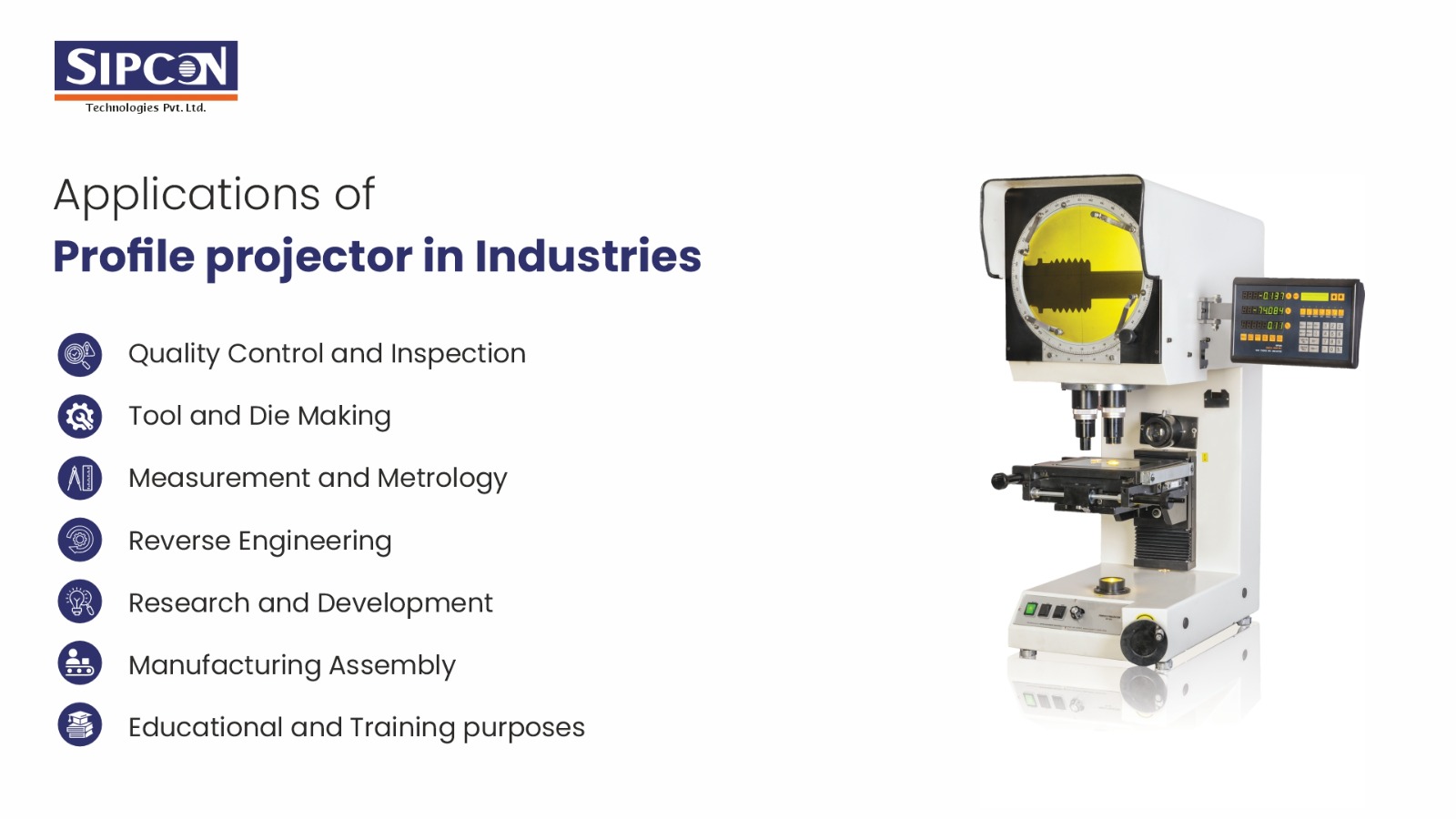
Despite the growing popularity of advanced digital measuring systems, the profile projector remains a trusted inspection tool across automotive, aerospace, medical devices, electronics, mold manufacturing, tool rooms, and quality control laboratories.
The reason is simple. It allows inspectors to examine the actual shape of a component without touching it, making measurements easier for delicate, complex, or finely machined parts.
If you're planning to invest in an optical projector or simply want to understand how these machines work, this guide will walk you through the essentials without making things unnecessarily complicated.
What is a Profile Projector?
A profile projector, often called an optical projector, is a precision measuring instrument that magnifies the shadow or image of a component onto a screen. The enlarged image allows operators to inspect dimensions, angles, radii, contours, and surface features with much greater clarity than the naked eye.
Instead of relying only on calipers or micrometers, inspectors can compare the projected profile with drawings or measure critical dimensions using digital scales.
This non-contact method is especially useful for:
Small machined components Plastic molded parts Press tools Gears Springs Electronic connectors Cutting tools Rubber components
When dealing with fragile or miniature parts, touching them repeatedly during inspection isn't always a good idea. A profile projector helps avoid that issue.
Why Manufacturers Still Prefer Optical Projectors
Many factories now use CMMs and vision measurement systems, yet profile projectors continue to have their place.
There are several practical reasons.
First, operators can instantly visualize the complete shape of a component instead of checking one dimension at a time.
Second, training new inspectors becomes easier because projected images are much larger and easier to understand.
Third, for routine inspections, a profile projector often delivers measurements much faster.
For many quality departments, it simply becomes the quickest way to verify whether a part meets design requirements.
How Does a Profile Projector Machine Work?
The working principle is fairly straightforward.
A strong light source shines through or onto the component.
The lenses magnify the image, which is then projected onto a viewing screen.
The operator moves the worktable using precision stages while measuring distances, angles, diameters, or geometric features using digital readouts.
Although the process sounds simple, accuracy depends on several factors:
Proper alignment Correct magnification lens Stable illumination Clean optics Correct positioning of the component
Don't rush this part. Even slight misalignment during setup can affect multiple measurements.
Main Components of a Profile Projector Machine
Understanding the machine becomes much easier once you know its basic parts.
Projection Screen
This is where the enlarged profile appears.
Modern machines often include digital angle indicators and overlay charts to simplify measurements.
Objective Lens
Different lenses provide different magnification levels.
Common options include:
10X 20X 50X 100X
Higher magnification improves visibility but reduces the viewing area.
Choosing the wrong lens is a common mistake during inspection.
Work Stage
The precision stage holds the component and moves smoothly in X and Y directions.
Digital scales record movement accurately.
Small deviations can ruin the results, especially while inspecting miniature components.
Illumination System
Most profile projectors use transmitted and reflected lighting.
Proper lighting often determines whether tiny defects become visible or remain hidden.
Digital Readout
Modern systems display measurements electronically, reducing manual reading errors.
Different Types of Profile Projectors
Every inspection application is different.
Selecting the right machine depends largely on component size and inspection requirements.
Vertical Profile Projector
A Vertical Profile Projector projects light vertically through the component.
This configuration works particularly well for flat parts such as:
Stamped components PCB parts Thin metal sheets Washers Plastic components
Because gravity keeps flat components stable, positioning becomes easier.
Horizontal Profile Projector
A Horizontal Profile Projector projects light horizontally.
These machines are generally preferred for longer or cylindrical components.
Examples include:
Shafts Thread gauges Screw components Long cutting tools Springs
They provide better support for elongated workpieces that may be difficult to position vertically.
Camera Based Profile Projector
A Camera Based Profile Projector combines traditional optical projection with digital imaging.
Instead of relying solely on manual observation, integrated cameras capture high-resolution images for analysis.
Regular care keeps measurement accuracy consistent.
Good practices include:
Clean optical lenses carefully. Protect the screen from scratches. Verify calibration periodically. Keep guideways clean. Avoid excessive vibration. Store accessories properly. Cover the machine when not in use.
Preventive maintenance always costs less than repairing damaged optics.
How to Choose the Right Profile Projector Manufacturer
Selecting the right profile projector manufacturer is just as important as choosing the machine itself.
Instead of comparing only prices, evaluate factors such as:
Measurement accuracy Machine stability Optical quality Calibration support After-sales service Availability of spare parts Software support Industry experience Operator training
A slightly higher investment often proves worthwhile if the equipment remains reliable for many years.
Is a Profile Projector Still Worth Buying?
For many inspection tasks, absolutely.
Advanced measurement systems certainly have advantages, but they aren't always necessary for every production line.
A profile projector machine continues to offer an excellent balance between accuracy, ease of use, inspection speed, and operating cost.
Many quality control departments use profile projectors alongside CMMs and vision systems rather than replacing one with another.
Each tool serves a different purpose.
Final Thoughts
A good profile projector is less about fancy features and more about delivering consistent, repeatable measurements day after day. Choosing between a Vertical Profile Projector, Horizontal Profile Projector, or Camera Based Profile Projector depends on the parts you inspect most often, not simply on specifications printed in a brochure.
Before making a purchase, spend some time evaluating your inspection needs, sample components, and workflow. A practical demonstration usually tells you more than a long feature list.
If you're looking for dependable dimensional inspection equipment, it's worth exploring established manufacturers with proven experience in precision metrology. Companies like Sipcon offer a range of profile projection solutions designed for different industrial applications, backed by technical support and calibration expertise. The right machine should make inspections more reliable—not more complicated—and that is ultimately what matters on a busy production floor.