subject: A Practical Framework for Expanding from the UK to Dubai [print this page] Introdution
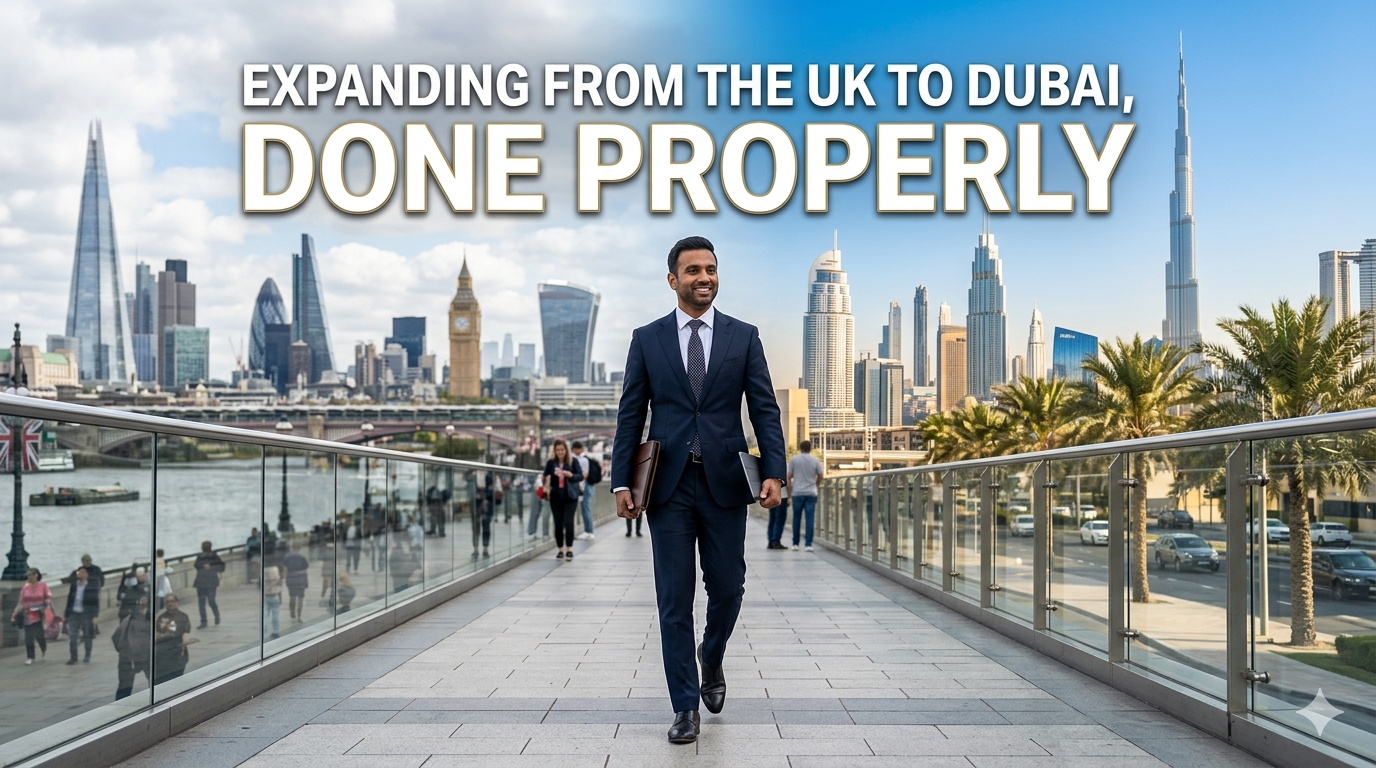
The moment you begin thinking about expanding from the UK to Dubai is the moment your business stops seeing borders and starts seeing opportunity. For ambitious founders and established companies alike, Dubai represents far more than a new market; it is a gateway to global growth, financial advantage, and strategic positioning that amplifies what your business has built in the United Kingdom. Over the next several thousand words, we will walk through the journey as it really unfolds, the motivations that guide founders, the practical decision points, the regulatory landscape, and the human side of making this transformational shift.
The Decision to Expand From the UK to Dubai
When UK companies contemplate expanding into the Middle East, the first consideration is often why Dubai, specifically, and why now. For many founders, the answer lies in a combination of economic incentives, strategic geographic positioning, and the city’s reputation as a leading international hub. While the UK remains a strong and established business base, founders feel the pull of Dubai’s pro-business environment that is engineered for global connectivity and rapid scale.
Imagine a market where corporate tax can effectively be zero, where foreign ownership is welcomed, and where English is widely spoken in business circles. Dubai’s reputation reflects this reality. Its modern, global infrastructure and world–class connectivity linking Europe, Asia, and Africa make it uniquely positioned for companies that want to transcend a strictly regional footprint.
For leaders looking beyond typical expansion routes, expanding from the UK to Dubai is not just about entering another market; it’s about positioning for exponential growth. This section explores what fundamentally motivates UK founders to make this pivotal transition.
As discussed across business and finance features on the Ogapatapata, entrepreneurs are increasingly prioritizing jurisdictions that offer regulatory clarity and banking credibility.
The Commercial Advantage
Dubai’s business ecosystem is designed to attract foreign investors. UK companies face corporate tax rates that can be significantly higher and more complex than those found in the UAE. In contrast, many Dubai jurisdictions offer a zero corporate tax regime and no personal income tax for most activities. This difference in tax structure can dramatically improve profit margins and returns on investment.
Dubai also offers a multiplicity of free zones that grant 100% ownership, streamlined licensing, simplified repatriation of profits, and access to world–class facilities tailored to specific industries, from media and logistics to tech and finance.
Geopolitical and Market Position
One cannot underestimate Dubai’s geographical advantage. Situated between major global markets, it serves as a logistical and commercial bridge between continents. For UK businesses that want to access emerging markets in Asia, the Middle East, and Africa, Dubai is not just a destination; it’s the crossroads of influential trade routes and partnerships.
Furthermore, over the past decade, Dubai has invested heavily in business infrastructure, including free–trade zones with tailored regulatory environments, cutting–edge logistics networks, and financial centers that rival London and New York in sophistication. In 2025 alone, the Dubai International Financial Centre (DIFC) experienced a nearly 40% rise in new company registrations, reflecting broad confidence in the city’s long–term growth path.
Planning the Expansion
Every successful expansion begins with clarity of strategy. The question is not whether to expand but how to expand in a way that aligns with your business’s long–term goals. For UK companies, that means evaluating structure, legal obligations, market positioning, and execution methodology.
Choosing the Right Business Structure
Dubai offers several business structures tailored to different strategic needs. For UK businesses, these typically include Mainland entities, Free Zone companies, and offshore structures. Each has distinct advantages and regulatory requirements:
Mainland Company: Offers full access to the entire UAE market, including local trade and government contracts. Mainland businesses now often permit 100% foreign ownership in many sectors, reducing historical barriers and enabling direct operations across the Emirates. Free Zone Company: Ideal for companies focused on international trade, export, and specific industry activities. Free zones allow 100% foreign ownership, tax exemptions, and streamlined administrative processes. Offshore Entity: Best suited for asset holding, international business not operating locally, or special structures where UAE residency may not be necessary. These entities have regulatory advantages but limitations in trading within the UAE.
Choosing the right structure is not just a regulatory decision; it is a strategic one that affects your market reach, cost structure, and future growth trajectory.
Licensing and Legal Compliance
Once the intended business structure is chosen, the next step is obtaining the appropriate licensing. Dubai requires businesses to hold a trade license that corresponds with their specific activities, whether commercial, professional, industrial, or otherwise. This involves approvals from different authorities, depending on the chosen location and type of business.
Equally important is compliance with UAE corporate governance rules. Even with the simplified business environment, Dubai’s regulatory framework demands rigorous adherence to documentation, financial reporting, and audit standards. UK companies often need to prepare apostilled documents, ensure legal translations, and navigate local requirements that differ from the UK’s Corporate Law.
Sequencing Your Registration
A typical company formation journey in Dubai includes several key steps:
Selection of Business Activity: Define what your company will legally be permitted to do. This has implications for licensing and other regulatory obligations. Trade Name Reservation: Your company name must meet local rules and be approved prior to registration. Initial Approvals: Authorities must give no–objection approvals before moving forward with formal registration. Submission of Legal Documents: Articles of Association, passport copies, and other regulatory papers must be submitted. Office Lease and Ejari Registration: Many business structures require a physical office and an Ejari–registered lease agreement. Final License Issuance: After review and payment of fees, the formal trade license is issued, marking your official entry.
Each stage demands careful documentation and structured planning to avoid delays and ensure compliance.
Human Considerations
Strategic planning is only one piece of the puzzle. Expanding from the UK to Dubai also involves cultural, operational, and personnel considerations that determine long–term success.
Talent and Leadership
As your company establishes itself in Dubai, building local leadership and a capable team becomes essential. Dubai is home to a diverse workforce with international experience. Integrating local talent with your existing UK team can provide deep market insights and operational agility.
Work permits, visas, and expatriate hiring procedures must also be thoughtfully managed. The UAE has specific visa types for investors, partners, employees, and family members. Planning these logistics early ensures that your workforce is adequately supported.
Adapting to Local Business Culture
Dubai’s business culture blends global professionalism with regional customs. For UK founders, understanding local norms, expectations, and negotiation styles is crucial. Respect for local traditions, decision–making practices, and industry norms builds trust with partners and clients.
Cultural intelligence is not just about courtesy; it’s a strategic asset. Businesses that respect and understand the local environment can unlock opportunities that others overlook.
Operational Costs and Expectations
While Dubai offers competitive tax benefits, operating costs such as office rent, sponsorship fees, visa expenses, and administrative costs must be calculated realistically. Budgeting for these elements is essential to sustain your position and execute effectively in the Dubai market.
Scaling and Long-Term Growth
Once your business is established in Dubai, the focus shifts from setup to scale. Dubai’s robust urban economy, strong consumer demand, and global networks create an environment conducive to growth across sectors, be it finance, technology, logistics, tourism, or professional services.
Founders aiming for rapid expansion can leverage Dubai’s strategic position to build partnerships across the Middle East, North Africa, and South Asia. For companies in finance and fintech, the city’s growing reputation as a financial hub presents unparalleled opportunities.
Conclusion
Expanding from the UK to Dubai is a strategic milestone for companies seeking to redefine their growth horizons. With thoughtful planning, legal compliance, cultural integration, and operational readiness, UK businesses can unlock opportunities that reshape their future. Dubai’s dynamic ecosystem isn’t just a destination; it is a launchpad for global influence.
For UK founders ready to take this step, the journey requires both methodical execution and visionary leadership. When done properly, the rewards extend far beyond geographic expansion; they set the stage for sustainable, international success.
http://www.insurances.net/attachment.php?aid=9965
welcome to Insurances.net (https://www.insurances.net)